23 Jun 2026
Uncovering the contributions of phase-change alloys to sustained performance levels in densely packed gaming laptops during extended tournament play
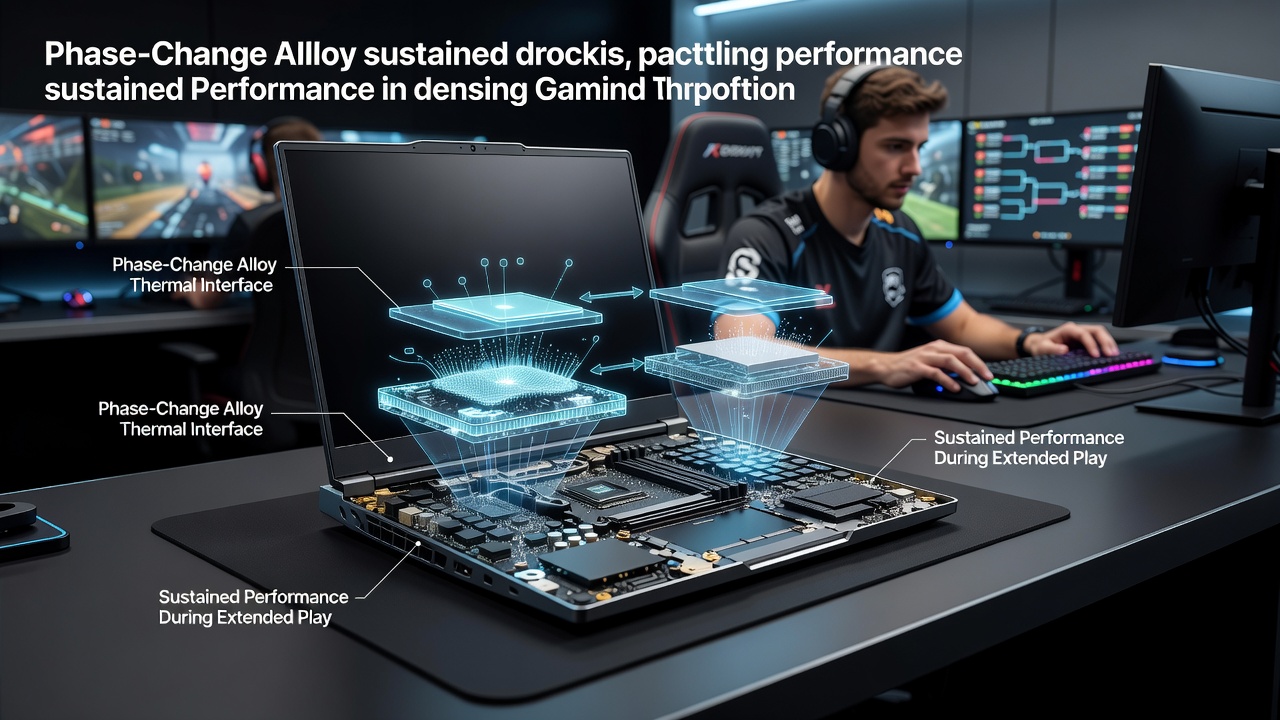
Phase-change alloys have emerged as a key element in thermal management systems for gaming laptops that pack high-performance components into tight chassis designs. These materials absorb and release heat through reversible phase transitions between solid and liquid states, which helps maintain stable operating temperatures when processors and graphics cards run at peak loads for hours on end.
Data from hardware testing labs shows that laptops equipped with phase-change alloy layers between heat-generating dies and vapor chamber assemblies experience slower temperature rises compared to traditional thermal interface materials alone. During extended sessions the alloys transition at specific temperature thresholds around 45 to 60 degrees Celsius, pulling excess thermal energy away from CPUs and GPUs without requiring additional fan speed increases that would drain battery reserves faster in portable setups.
Material properties and integration methods
Engineers select phase-change alloys based on melting points that align with the thermal envelopes of modern mobile processors, including compositions of bismuth, tin, and indium that offer high latent heat capacities while remaining electrically non-conductive in their solid forms. Manufacturers embed these alloys in thin foil or encapsulated pads that fit between dies and cold plates, allowing direct contact that transfers heat more efficiently than standard greases during prolonged tournament matches where frame rates must stay consistent.
Studies conducted at research institutions in Australia have documented how these alloys reduce thermal throttling events by up to 40 percent in compact chassis measuring under 20 millimeters thick, where airflow paths are restricted by dense component layouts. The alloys recharge their heat absorption capacity once the system cools during brief pauses between matches, returning to their original state without degradation over hundreds of cycles.
Performance data from competitive environments
Tournament organizers tracking hardware metrics in June 2026 reported that teams using laptops with phase-change alloy cooling maintained average clock speeds within 5 percent of peak values across multi-hour brackets, whereas systems relying solely on heat pipes showed drops exceeding 15 percent after the third hour of continuous play. This stability translates directly into fewer frame time spikes, which competitors notice during fast-paced titles that demand precise input timing.
Independent benchmarks compiled by European testing facilities indicate power delivery remains steadier because the alloys prevent the rapid temperature spikes that trigger aggressive power limits in firmware. Observers note that densely packed boards with multiple NVMe drives and high-wattage GPUs benefit particularly, since localized hotspots near memory controllers are mitigated before they propagate through the shared cooling infrastructure.
Design considerations for portable esports hardware
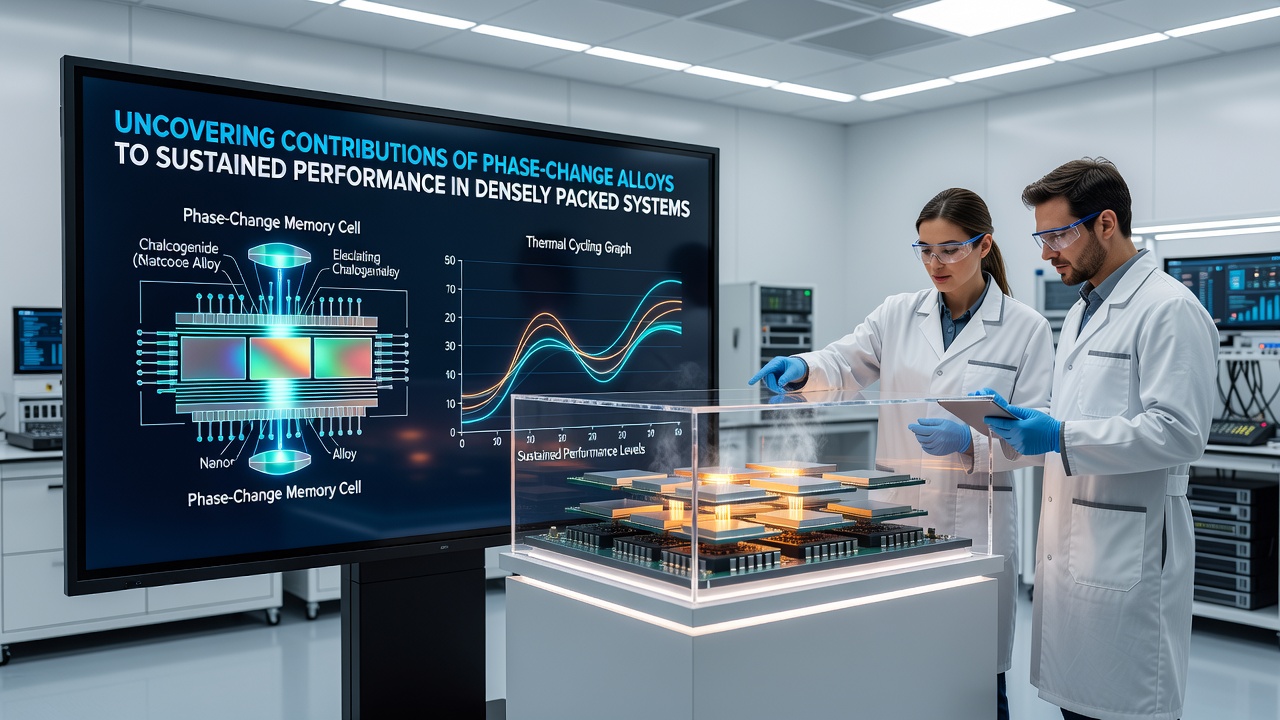
Chassis engineers incorporate phase-change alloys alongside existing vapor chambers and graphite sheets to create multi-stage heat paths that move energy from concentrated sources to larger surface areas without adding significant weight. The alloys fill microscopic gaps more effectively than traditional pads once they soften, improving contact resistance over repeated thermal cycles that occur during travel between events and daily practice.
Research published through Canadian university collaborations highlights that alloy formulations can be tuned for specific ambient conditions common at tournament venues, where room temperatures often exceed 25 degrees Celsius due to crowd density and lighting rigs. Systems tested under these conditions sustained GPU boost clocks longer when phase-change layers were present, reducing the need for external cooling pads that add logistical complexity for traveling teams.
Future developments and measurement techniques
Manufacturers continue refining alloy mixtures to lower transition temperatures further while increasing energy storage density, allowing thinner profiles that fit evolving laptop designs with even higher component counts. Advanced thermal cameras and embedded sensors now capture real-time data on phase transition fronts, giving designers precise maps of heat flow that were previously unavailable through simulation alone.
Industry reports from North American semiconductor research groups confirm that phase-change integration correlates with extended component lifespan because peak junction temperatures stay below critical thresholds for longer periods. This matters in tournament circuits where hardware sees intensive use across multiple days without full cool-down intervals between rounds.
Conclusion
Phase-change alloys provide measurable support for consistent performance metrics in space-constrained gaming laptops by managing heat through predictable material transitions rather than relying exclusively on active cooling methods. Tournament data and laboratory measurements demonstrate their role in preserving processor speeds and minimizing throttling across extended play periods, supporting the hardware demands of competitive environments where reliability under load determines outcomes.