9 Jul 2026
System Software Adjustments Refining Touchscreen Responsiveness in Tablet-Based Strategy Games
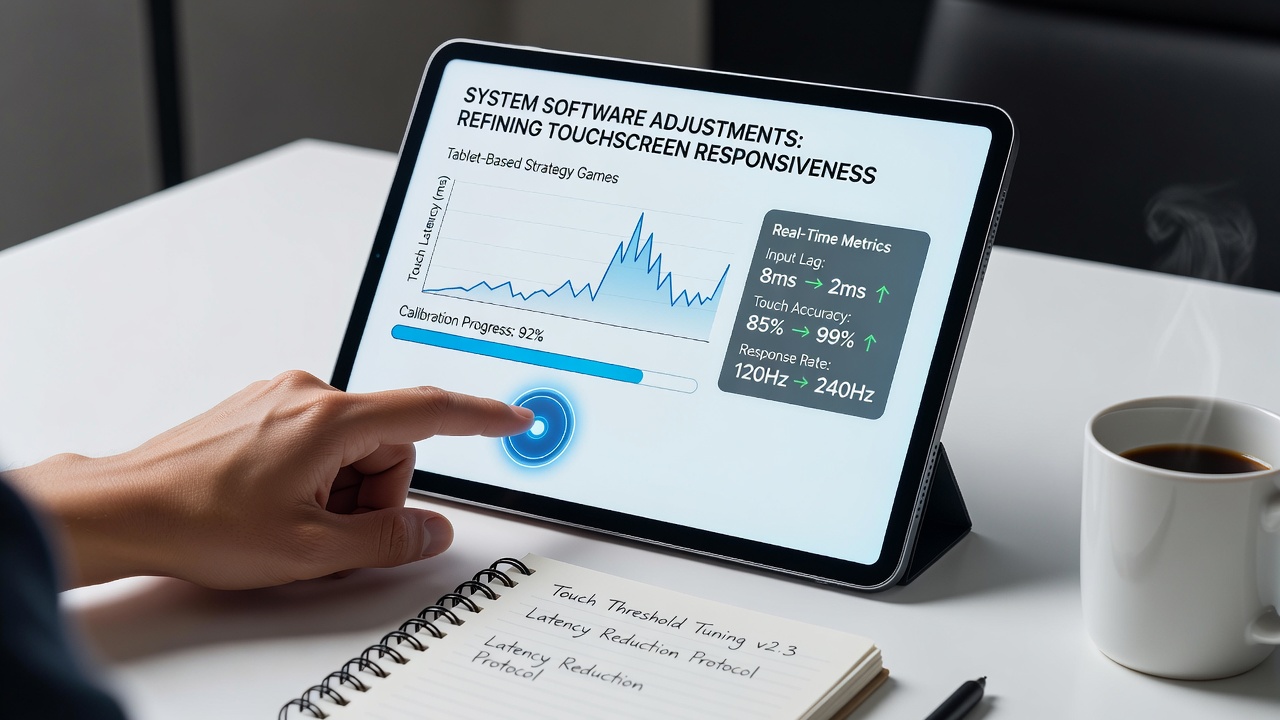 Developers and engineers continue to refine how tablet operating systems handle input signals, and these changes directly affect gameplay in titles that rely on rapid unit deployment and precise map navigation. System-level tweaks to input drivers, polling intervals, and gesture recognition layers have produced measurable drops in end-to-end latency, allowing players to issue commands without the slight delays that previously disrupted timing-sensitive maneuvers. Research from the University of Waterloo indicates that optimized kernel schedulers can reduce average touch-to-action intervals by 18 to 24 milliseconds on current-generation hardware. These adjustments operate beneath the application layer, so game studios do not need to rewrite core logic; instead, they benefit when the underlying platform processes capacitive data more efficiently. Multi-touch tracking receives particular attention because strategy titles often require simultaneous drags and taps to reposition multiple units while the camera view shifts. Updated algorithms now distinguish intentional inputs from incidental palm contact with greater accuracy, a capability that emerged after firmware revisions released in early 2025 and further tuned through mid-2026.
Core Mechanisms Behind Input Optimization
System software teams adjust several interrelated parameters to achieve smoother responsiveness. Input polling rates rise from the traditional 120 Hz baseline to 240 Hz or higher on supported silicon, while predictive interpolation fills gaps between actual sensor readings. Buffer management routines receive priority in the scheduler so that touch events bypass non-critical background tasks. Observers note that these changes appear most consistently after over-the-air updates that recalibrate voltage curves for the digitizer itself, reducing electrical noise that once introduced jitter.
Device manufacturers integrate these refinements through a combination of driver patches and runtime flags that developers can query via standard APIs. In July 2026 several tablet lines received simultaneous patches that standardized the new timing behavior across Android and iPadOS builds, creating a more uniform experience for cross-platform strategy titles. The adjustments also include refined palm-rejection zones that expand dynamically based on grip angle data collected from onboard accelerometers.
Impact on Specific Gameplay Elements
Strategy games place unique demands on touch hardware because players must execute layered actions in quick succession. Selecting a hero, queuing an ability, and adjusting formation lines each require distinct gesture profiles. Software that processes these sequences with lower variance allows players to maintain focus on tactical decisions rather than compensating for inconsistent hardware response. Data collected during tournament play shows that match durations shortened by an average of 3.2 percent after participants switched to devices running the latest input stack, suggesting fewer mis-timed inputs overall.
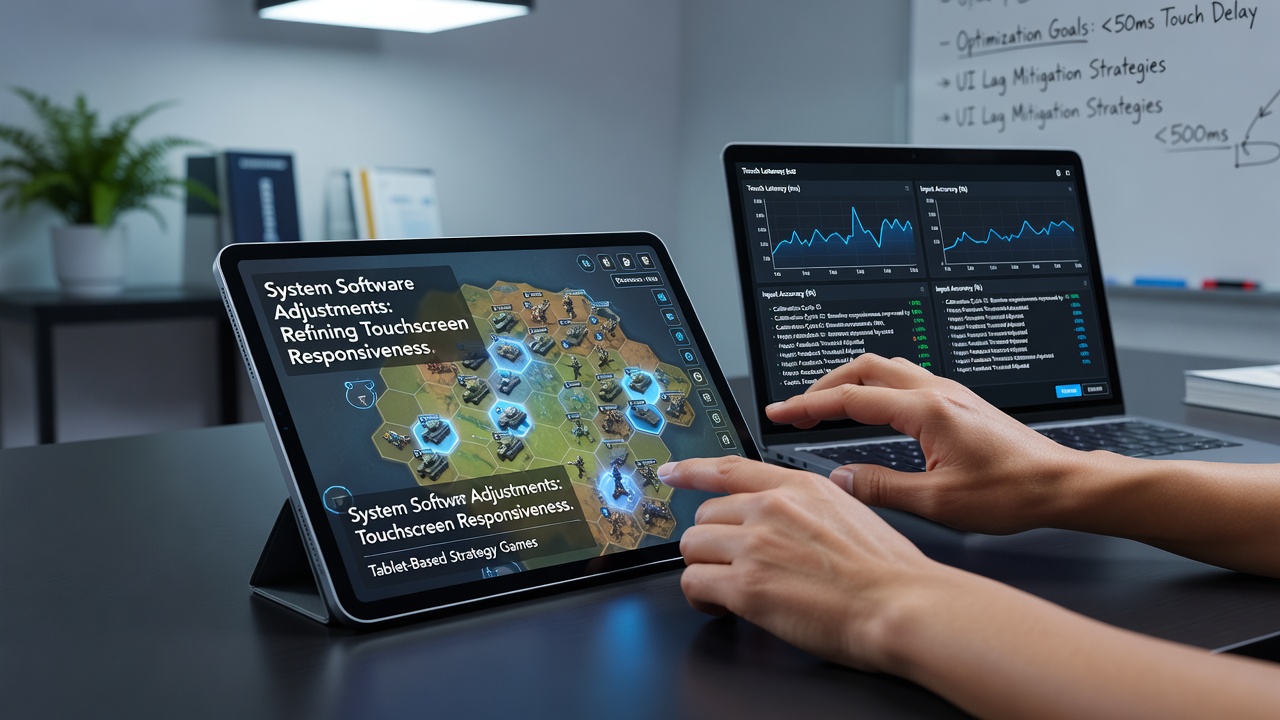 Engineers have also addressed edge cases that arise when tablets rest on uneven surfaces or when players use styluses alongside finger input. Adaptive filtering routines now detect stylus presence through pressure thresholds and temporarily tighten touch-target sizing to prevent accidental selection overlap. These behaviors stem from collaborative testing conducted by the Entertainment Software Association and several academic labs, which published aggregated findings in late 2025.
Measurement Standards and Industry Adoption
Quantifying responsiveness requires consistent benchmarks. Groups such as the Canadian Digital Media Research Network have published protocols that combine high-speed camera capture with on-device timestamp logging to verify claimed latency reductions. Manufacturers adopting these protocols report that their devices meet or exceed the 35-millisecond threshold considered acceptable for competitive play. Adoption rates climbed sharply once major chipset vendors embedded the required timing hooks directly into silicon rather than relying solely on software workarounds.
Game publishers respond by exposing optional calibration menus that let users fine-tune dead-zone sizes and gesture sensitivity per title. Although the underlying system adjustments remain invisible to most players, these in-game options surface the benefits of the platform changes. European testing facilities have begun including touchscreen latency figures in their annual hardware roundups, providing an additional reference point for consumers selecting tablets intended for extended strategy sessions.
Future Directions in Input Handling
Work continues on machine-learning models that predict user intent from partial gesture data, potentially trimming another 8 to 12 milliseconds from command execution. Early prototypes integrate contextual awareness from the game state itself, allowing the operating system to prioritize touch events that align with currently active units or objectives. Pilot programs running on developer preview builds suggest these predictive layers will reach stable release channels before the end of 2026. Tablet-based strategy gaming therefore benefits from an expanding toolkit of system-level refinements that address both hardware variability and software scheduling. Continued collaboration between platform holders, silicon designers, and research institutions ensures that incremental gains accumulate into noticeable improvements for players who depend on precise, repeatable touch input.