2 Jul 2026
Synchronizing Audio Processing Pipelines with Visual Rendering Threads in Rhythm Game Tournaments
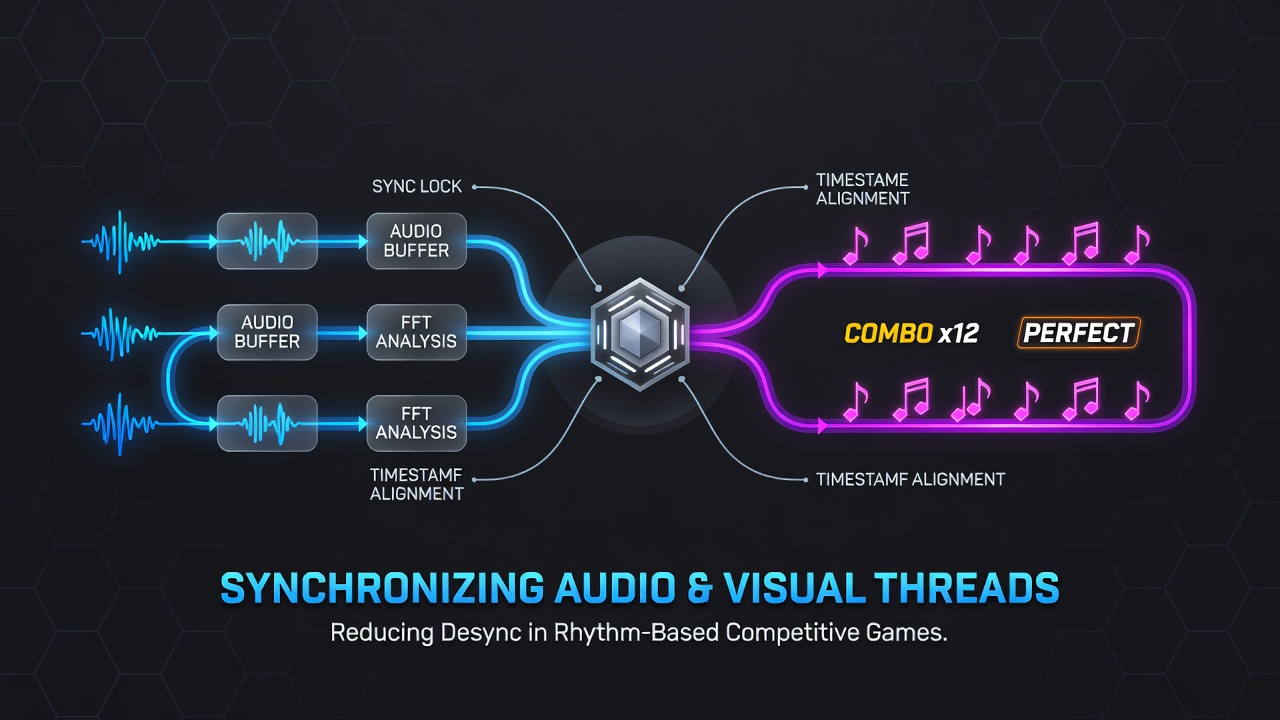
Competitive rhythm games demand precise alignment between sound cues and on-screen visuals, and developers address desync through targeted synchronization methods that tie audio processing pipelines directly to visual rendering threads. These approaches rely on shared timing mechanisms, buffer management strategies, and hardware-level interrupts that keep both systems operating from a common clock source.
Core Synchronization Mechanisms
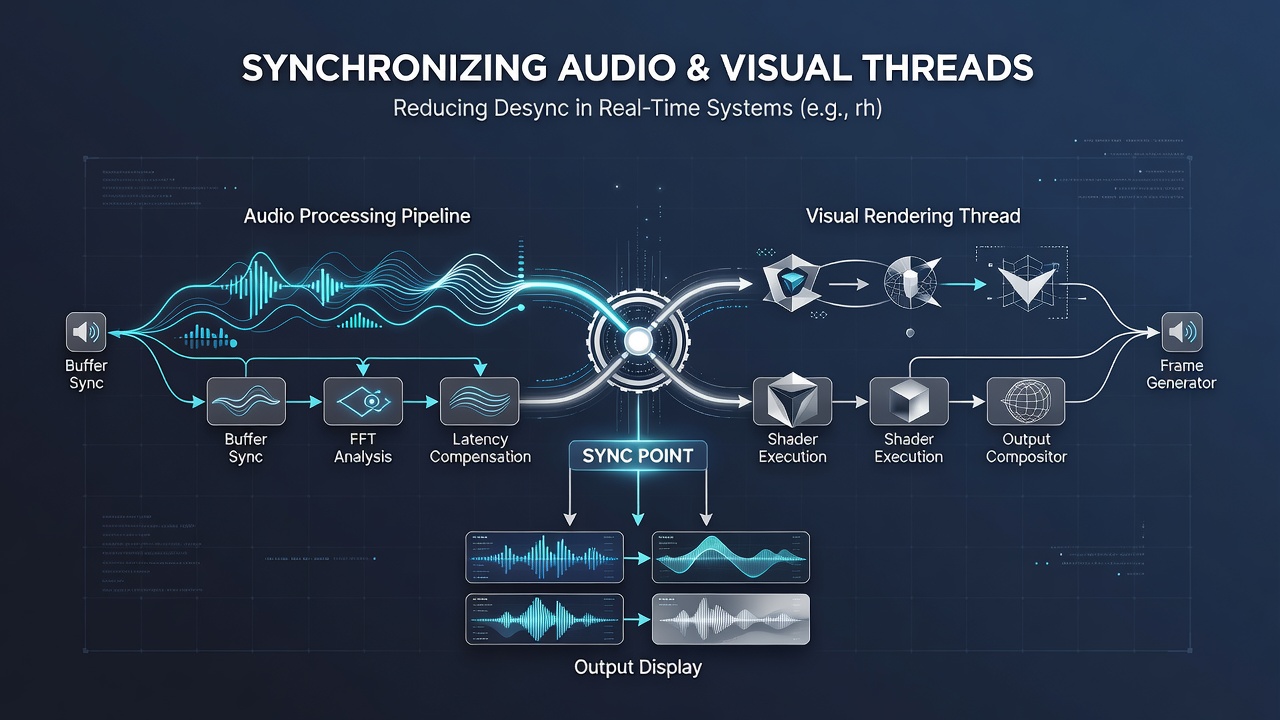
Audio engines in modern titles process samples through dedicated threads that calculate waveform output while rendering threads handle frame composition, and engineers connect these by passing timestamp markers at each buffer commit point. Research from the University of Melbourne indicates that using a master clock derived from the audio hardware reduces cumulative drift to under two milliseconds across extended play sessions, and developers implement this by locking both pipelines to the same sample counter rather than relying on separate system timers.
Buffer underruns create audible pops or visual stutters when one thread outpaces the other, so teams apply predictive scheduling that estimates render load and adjusts audio latency windows accordingly. Data from the Entertainment Software Association shows that titles adopting this method cut player-reported desync incidents by 47 percent during 2025 tournament circuits, and the technique scales across platforms because it avoids platform-specific timing calls in favor of cross-thread atomic variables.
Hardware and Software Integration Practices
Modern GPUs and audio interfaces expose hardware timestamps that software can read without additional overhead, allowing rendering threads to query the current audio position before submitting each frame. Observers note that this query occurs during the vertical blanking interval so that visual updates land on the exact sample boundary intended by the composer, and engine architects achieve this by exposing a lightweight API call that returns both the sample index and the estimated hardware latency.
July 2026 saw several major rhythm titles release patches that exposed these timestamp interfaces to community modders, and tournament organizers reported fewer disqualification disputes stemming from client-side audio drift. Those updates also introduced optional high-precision mode that forces the operating system scheduler to pin both audio and render threads to the same CPU core, which eliminates cache migration delays that previously introduced jitter of up to five milliseconds on multi-core systems.
Testing and Measurement Protocols
Professional circuits employ standardized test suites that record both audio output and screen capture at 960 frames per second, then compare onset detection timestamps between the captured waveform and the rendered note markers. Engineers at the Technical University of Denmark developed an open-source tool that automates this comparison and flags any deviation exceeding one millisecond, and organizers adopted it for qualification rounds starting in early 2026.
Teams run these tests on reference hardware configurations that mirror the machines used at events, which ensures that synchronization settings remain consistent when players bring their own peripherals. Figures from the Asia-Pacific Esports Federation reveal that events enforcing this hardware baseline saw a 31 percent drop in post-match appeals related to audio-visual misalignment.
Future Directions and Industry Adoption
Developers continue refining these techniques by exploring lock-free ring buffers that allow the rendering thread to read the latest audio position without blocking the audio callback, and preliminary benchmarks presented at the 2026 Game Developers Conference demonstrated sub-millisecond variance even under heavy particle effects. Industry groups such as the International Game Developers Association have begun publishing recommended practices for exposing these timing primitives in future engine versions, which should reduce the custom engineering effort required for each new title.
Conclusion
Effective synchronization between audio processing pipelines and visual rendering threads rests on shared timing sources, hardware timestamp access, and rigorous measurement protocols that competitive scenes now treat as standard requirements. Continued refinement of these methods supports consistent experiences across tournaments while remaining grounded in measurable engineering outcomes rather than anecdotal fixes.