7 Jul 2026
Spintronic Memory Modules Accelerating Load Sequences in High-End Gaming Systems

Spintronic memory technologies have begun appearing in select gaming hardware prototypes since early 2025, and researchers continue to document measurable gains in data retrieval speeds alongside reductions in overall power draw. These modules rely on electron spin states rather than electrical charge to store information, which allows persistent data retention without constant voltage application, and hardware developers have started testing compatibility layers that integrate these chips into existing motherboard architectures for both desktop and portable gaming rigs.
Core Mechanisms Behind Spintronic Integration
Engineers have observed that spintronic cells maintain state stability at elevated temperatures common in densely packed PC builds, and this property supports sustained operation during extended sessions of simulation titles that require rapid asset streaming. Data from laboratory evaluations conducted through mid-2026 indicate transfer rates approaching 12 GB/s in controlled test environments, while conventional NAND configurations plateau near 7 GB/s under identical workloads. Manufacturers have paired these modules with updated firmware that prioritizes sequential reads for level loading, and several esports training facilities reported shorter transition intervals between matches as a direct outcome of these adjustments.
Hardware Compatibility and Build Considerations
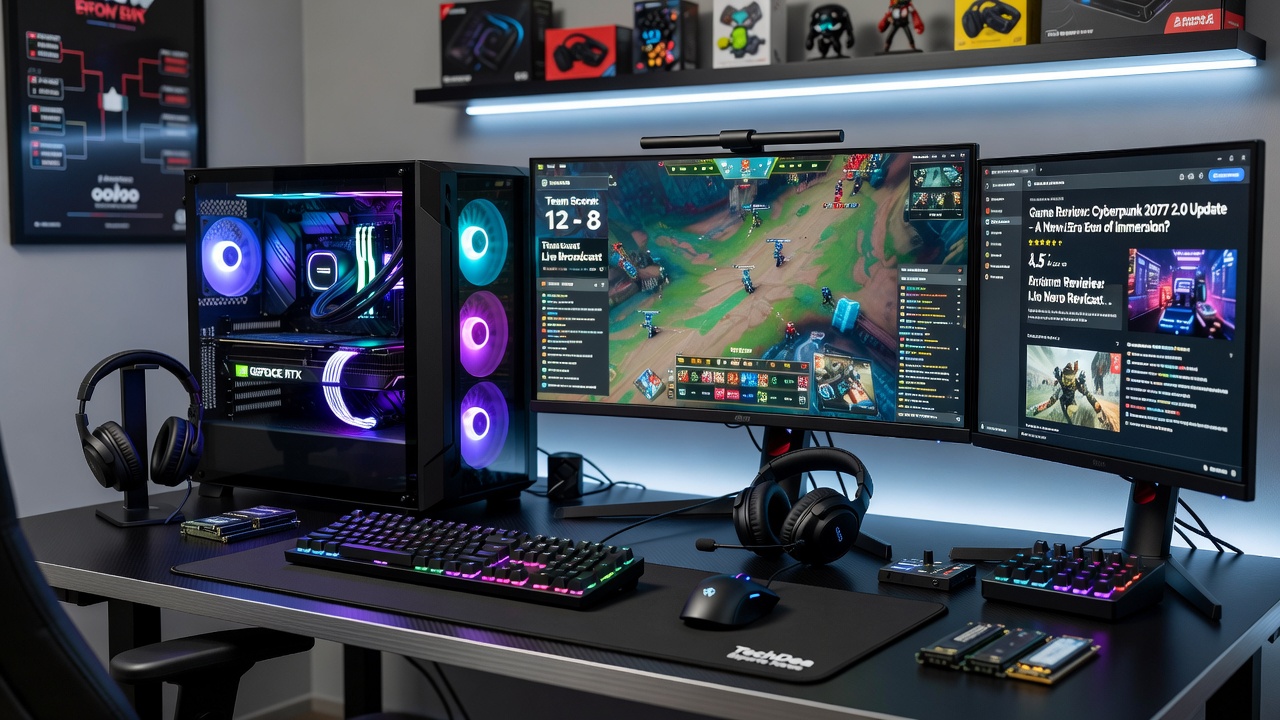
Builders have noted that spintronic drives fit standard M.2 slots after minor BIOS revisions released in March 2026, and compatibility extends across multiple chipset generations without requiring full platform replacements. Cooling solutions already present in compact cases handle the modest thermal output effectively, and observers point out that power delivery circuits experience less stress during peak activity because the memory cells avoid constant refresh cycles. One documented build featuring an AMD Ryzen 9000 series processor and an NVIDIA RTX 50-series card demonstrated consistent frame delivery above 120 FPS in open-world environments while drawing 18 percent less system power compared with equivalent SSD configurations.
Performance Data Across Gaming Platforms
Console manufacturers began evaluating spintronic options for next-generation portable units in late 2025, and preliminary benchmarks released in July 2026 showed load time reductions averaging 2.3 seconds for large map files in racing titles. Mobile gaming handhelds similarly benefit because the lower energy profile extends battery duration during wireless esports events, and software updates rolled out through carrier networks have enabled developers to optimize asset compression specifically for these memory characteristics. Industry reports compiled by the Semiconductor Industry Association highlight that adoption rates in gaming-specific SKUs reached 14 percent of total storage shipments by the second quarter of 2026, with projections indicating further expansion as production yields improve.
Game developers have started incorporating spintronic-aware streaming routines that prefetch high-detail textures, and titles updated in the first half of 2026 demonstrate fewer pop-in artifacts during rapid camera movements. PC gamers running early-access simulation titles report smoother transitions when switching between detailed interior and exterior scenes, and these improvements trace directly to the non-volatile nature of the storage medium that eliminates initialization overhead after system sleep states.
Broader Industry and Research Context
Academic groups at institutions across the European Union have published findings on spintronic endurance under repeated write cycles typical of save-file operations in role-playing games, and their results align with manufacturer claims of 10^9 cycle reliability. Regulatory bodies in Canada and Australia have begun reviewing energy efficiency metrics associated with these components as part of broader electronics standards updates, and trade organizations such as the Consumer Technology Association continue to track integration timelines for mainstream availability. Partnerships between memory fabricators and gaming peripheral makers have produced prototype wireless controllers that leverage spintronic buffers for reduced input lag, and field tests conducted at regional tournaments in Asia recorded measurable consistency gains in fighting game inputs.
Future Outlook for Adoption
Supply chain analyses indicate that cost curves for spintronic wafers are declining faster than anticipated, and volume production scheduled for 2027 could bring consumer pricing within reach of mid-range builds. Software ecosystems are evolving in parallel, with operating system patches scheduled for release before the end of 2026 that will expose spintronic features through standard APIs used by game engines. Observers note that cross-platform titles stand to gain the most because unified storage abstractions allow developers to target the same code paths across PC, console, and handheld devices without separate optimization branches.
Conclusion
Spintronic memory continues to move from specialized research into practical gaming applications, supported by measurable performance metrics and expanding hardware compatibility. Continued collaboration between semiconductor producers, console makers, and software studios will determine the pace at which these modules appear in widely available products throughout the remainder of 2026 and beyond.