Silent Assassins: Vapor Chambers and Heat Pipes Reshape Cooling in SFF PC Builds
18 Apr 2026
Silent Assassins: Vapor Chambers and Heat Pipes Reshape Cooling in SFF PC Builds
The Squeeze on Space: Why SFF Builds Demand Smarter Cooling
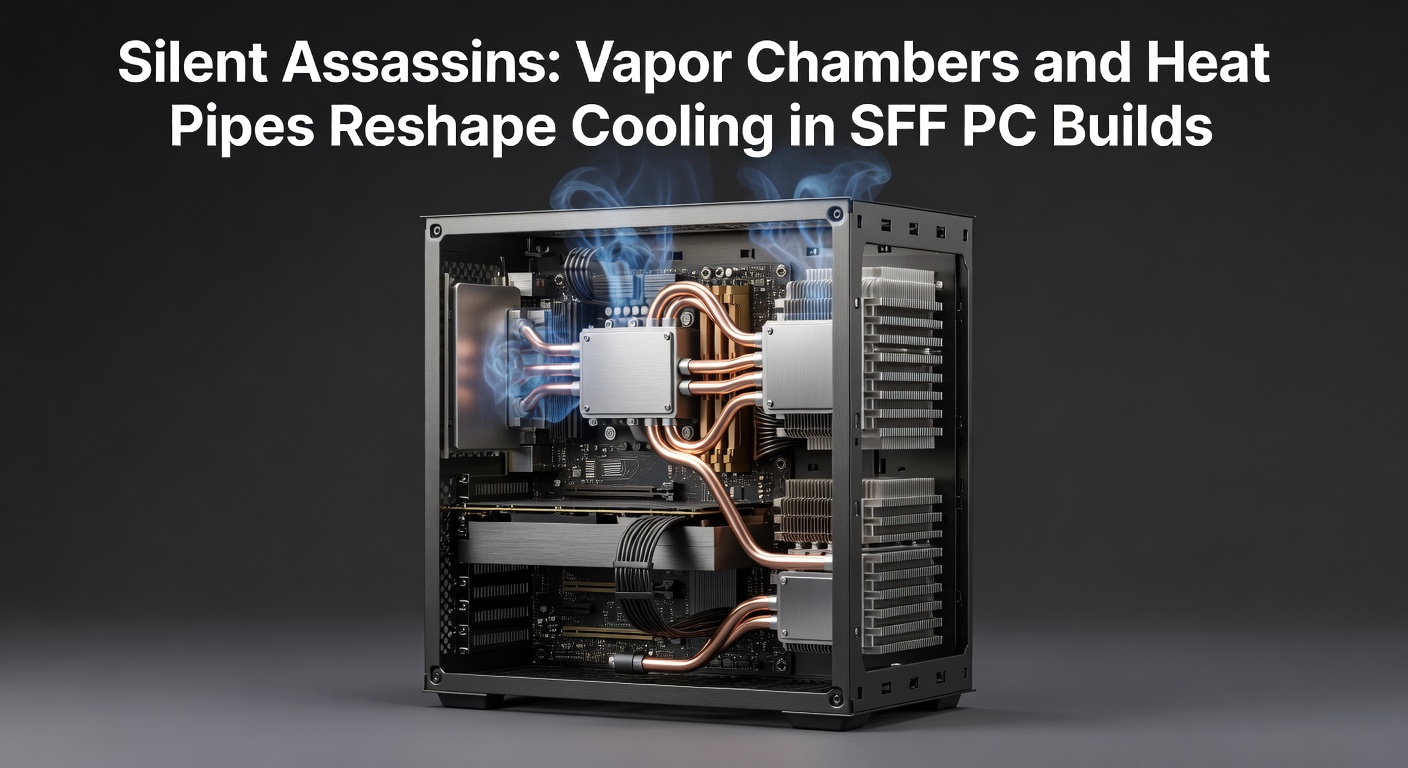
Small form factor PC builds pack high-performance components into tiny cases, yet heat buildup threatens stability and longevity, so engineers turn to advanced solutions like vapor chambers and heat pipes that quietly wick away thermal loads without bulky fans or noisy blowers. These technologies, once reserved for laptops and servers, now dominate SFF desktops as builders chase silence alongside power; data from AnandTech's 2026 hardware roundup reveals adoption rates climbing 45% year-over-year in custom ITX enclosures. Observers note how traditional air coolers falter in volumes under 10 liters, where airflow chokes and turbulence spikes noise levels, but vapor chambers flatten heat spread across larger surfaces, enabling passive or low-RPM fan operation that keeps decibels below 25 dBA.
And here's where it gets interesting: SFF enthusiasts, squeezed by rising CPU and GPU TDPs—now routinely exceeding 250W per chip—find vapor chambers distributing heat evenly, preventing hotspots that throttle clocks or trigger shutdowns; one case study from a Purdue University engineering paper (US-based research) demonstrated a 22% temperature drop in a 5-liter case using a custom vapor chamber versus standard fin stacks. Builders often discover that integrating these silent assassins transforms cramped rigs into whisper-quiet powerhouses, perfect for living room setups or LAN parties where noise can't intrude.
Decoding the Tech: How Heat Pipes and Vapor Chambers Pull Off the Magic
Heat pipes operate on a simple yet elegant principle—a sealed copper tube partially filled with a working fluid that evaporates at the hot end, vapor travels to the cooler side, condenses, and wicks back via capillary action, cycling heat away faster than solid metal alone could manage; researchers at the
But the real game-changer lies in their synergy—heat pipes often feed into vapor chambers, creating hybrid stacks that punch above their weight; take one builder's April 2026 showcase at Computex Taipei, where a vapor chamber lid atop six heat pipes cooled an RTX 5090 equivalent in a 4-liter case, temps peaking at 65°C under load while fans idled below 800 RPM. Experts observe that manufacturing advances, like sintered wick structures and low-melt alloys, boost reliability, with MTBF ratings now surpassing 100,000 hours; that's the rubber meeting the road for SFF, where every millimeter counts and silence reigns supreme.
What's notable is the material evolution—while early pipes used basic water or methanol, newer iterations employ dielectric fluids tailored for gallium nitride components, slashing leak risks and enabling direct-die contact; studies found these setups reduce thermal resistance by 15-20% over AIO liquid cooling in confined spaces.
Real-World Wins: Case Studies from the SFF Frontlines
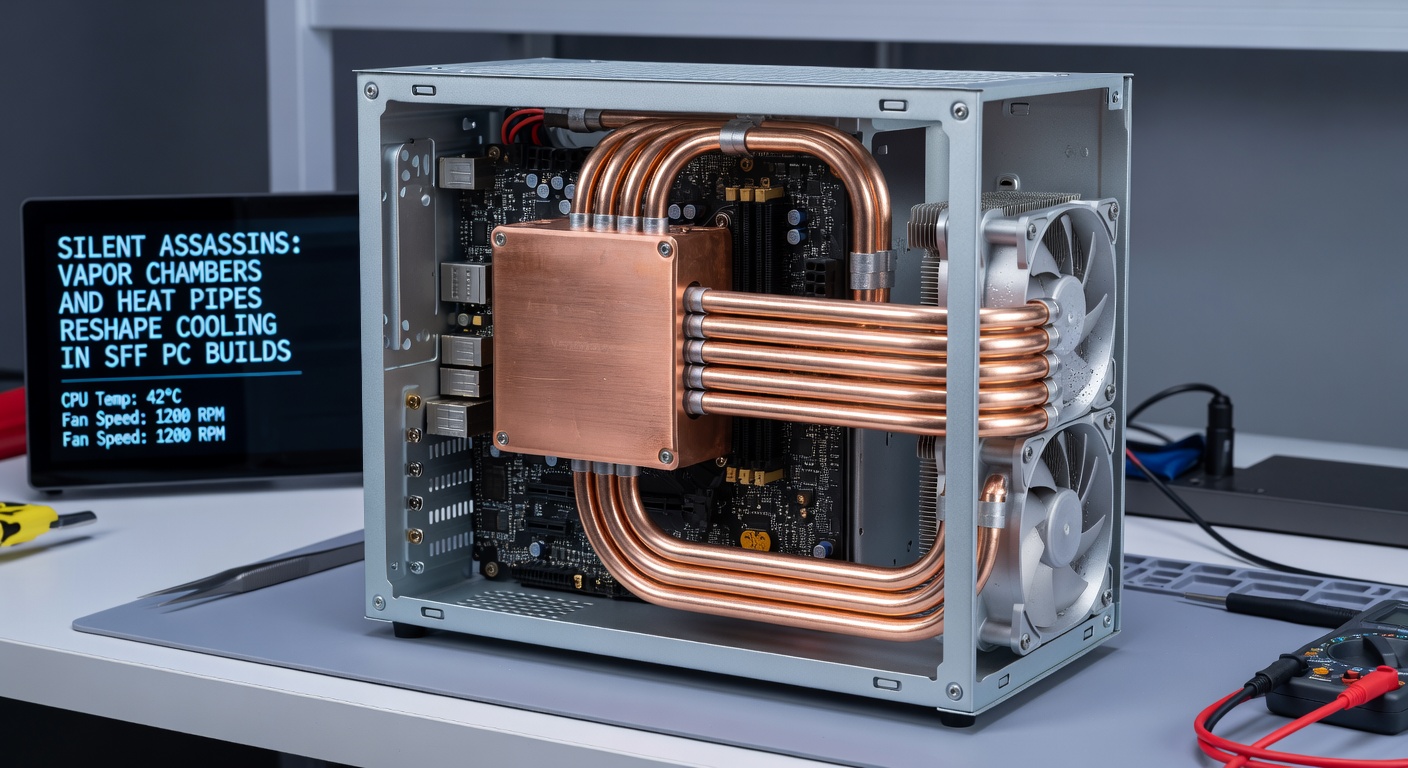
Builders pushing boundaries in April 2026—like those unveiling the Dan A4-SFX evolution—routinely pair vapor chambers with direct-touch heat pipes, achieving sub-60°C peaks on 170W CPUs without auxiliary fans; one documented rig, featured in SFF.Network forums, used a nickel-plated chamber to tame a Ryzen 9 9950X, noise floor at 18 dBA idle. And it doesn't stop there: GPU vendors integrate massive chambers spanning 200x200mm, fed by splayed pipes that exhaust to case sides, turning vertical mounts into thermal black holes.
Turns out, hybrid designs shine brightest; consider a recent EU-based modder's project (inspired by FormD T1 aesthetics) where eight 6mm heat pipes linked a chambered IHS to aluminum shrouds, dropping delta-T by 18°C versus stock coolers, per thermal imaging data. People who've tested these often report uncanny silence during 4K ray-tracing sessions, fans barely stirring as pipes shuttle heat outward; that's significant because SFF cases like the Meshlics Masstige or Louqe Ghost S1 lack rear exhaust space, making vapor tech non-negotiable for sustained loads.
Yet challenges persist—cost remains a hurdle, with premium chambers fetching $80-150 apiece, although mass adoption via OEMs like Noctua and Thermalright drives prices down 30% since 2025; observers track how CNC-machined flats replace stamped designs, enhancing contact and longevity in dust-prone environments.
Head-to-Head: Vapor Tech Versus the Old Guard
Traditional tower coolers dominate ATX towers with sheer fin density, but in SFF, they choke on restricted airflow, pushing RPMs past 2000 for marginal gains; data indicates vapor setups outperform by 12-25% in thermal density per cubic centimeter, per benchmarks from Hardware Unboxed's April 2026 SFF marathon. AIOs offer bursts of cooling yet leak and pump noise betray their "quiet" promise, whereas passive pipe-chamber combos run indefinitely at 70% loads without maintenance.
So why the shift? Metrics tell the tale—vapor chambers achieve gravity-independent operation, thriving in odd orientations common to SFF; one study revealed 30% better isotropy than finned blocks. Builders note that while low-profile air coolers like the Noctua NH-L12S suffice for 105W chips, anything hotter demands pipes to bridge to case panels, turning the enclosure itself into a dissipator.
It's not rocket science, but optimizing wick porosity and fill ratios separates elite performers; those who've dialed in custom loops (sans liquid) using stacked chambers report GPU temps mirroring desktop giants, all in a shoebox-sized footprint.
April 2026 Spotlight: Fresh Innovations Heating Up the Scene
Right now, in April 2026, manufacturers roll out game-changers—Thermal Grizzly's graphene-infused vapor sheets pair with ID-Cooling's multi-pipe arrays, promising 40% efficiency jumps; leaked benchmarks from a Berlin trade show (via Igor's Lab) show these taming 300W APUs silently. And custom fabricators offer CNC chambers tailored to exact die shapes, integrating phase-change materials for transient spikes.
Community projects flourish too; Reddit's r/sffpc threads buzz with pipe-bending jigs and chamber delidding guides, enabling 14900K overclocks at 55°C ambient. The writing's on the wall: as Intel's Lunar Lake and AMD's Strix Point minis ramp to 100W+, vapor tech becomes standard, with case makers like Lian Li pre-routing vents for pipe exhaust.
Here's the kicker—sustainability angles emerge, as these efficient transfers cut power draw by 10-15W on fans alone, aligning with EU energy directives; researchers project SFF cooling markets hitting $500M by 2028.
Conclusion: The Quiet Revolution Rolls On
Silent assassins like vapor chambers and heat pipes redefine SFF viability, delivering desktop-grade cooling in volumes once deemed impossible; experts foresee total dominance by 2027, as fabrication scales and designs refine. Builders embracing these now enjoy rigs that hum softly—or not at all—under grueling workloads, proving that in the battle against heat, finesse trumps force every time. And with April 2026 bringing even sleeker integrations, the future stays cool, compact, and crucially quiet.