Rumble Revolution: Haptics Evolve from Simple Vibes to Full-Sensory Feedback in Gaming Gear
16 Apr 2026
Rumble Revolution: Haptics Evolve from Simple Vibes to Full-Sensory Feedback in Gaming Gear
The Early Days of Rumble in Gaming
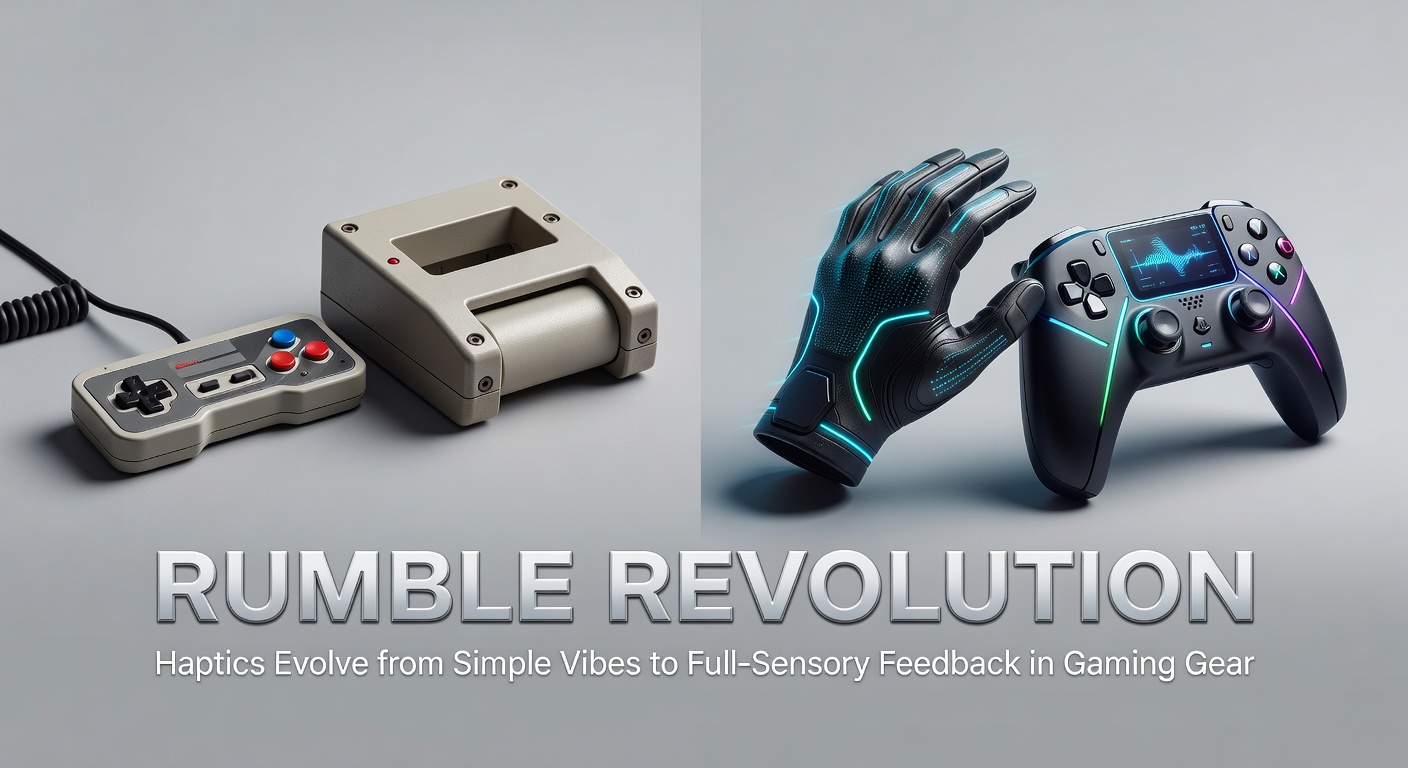
Game developers first introduced haptic feedback through basic vibration motors back in the late 1990s, when Nintendo launched the Rumble Pak for the Nintendo 64 in 1997; that add-on shook controllers during explosions or collisions, giving players a tangible sense of impact that simple visuals alone couldn't match. Soon after, Sony's DualShock controller hit PlayStation shelves in 1998, embedding dual motors into standard gamepads and turning vibrations into a core feature across genres from racing sims to first-person shooters. Those early eccentric rotating mass (ERM) motors buzzed uniformly, yet they marked the start of a shift where touch joined sight and sound as a key sensory layer in gaming experiences.
And while rudimentary, that tech hooked players fast; data from early adoption studies showed engagement spikes of up to 20% in games with rumble enabled, as tactile cues reinforced on-screen action and made virtual worlds feel more alive.
From Buzz to Precision: The Tech Leap
Fast forward to the 2010s, and linear resonant actuators (LRAs) began replacing clunky ERMs, allowing finer control over vibration intensity and direction since they oscillate along a single axis for sharper, more nuanced pulses. Developers like those at Microsoft rolled out Impulse Triggers on the Xbox One controller in 2013, channeling vibrations straight into individual trigger buttons during tense moments like pulling a bowstring in archery sims or revving engines in racers. What's interesting is how this precision ramped up immersion; research from the Immersion Corporation, a leader in haptic licensing, indicates that targeted feedback boosts player retention by enhancing emotional responses to in-game events.
Then came high-definition haptics with Sony's DualSense for PlayStation 5 in 2020, where voice coil actuators deliver variable textures—from gritty sand underfoot in desert treks to splashing rain on armor in battle sequences—mimicking real-world surfaces through subtle amplitude shifts and frequencies tailored per game asset. Xbox followed suit in 2021 with updated controllers featuring dynamic rumble that adapts to terrain in open-world adventures, proving the tech's scalability across platforms.
Full-Sensory Expansion Beyond Vibration
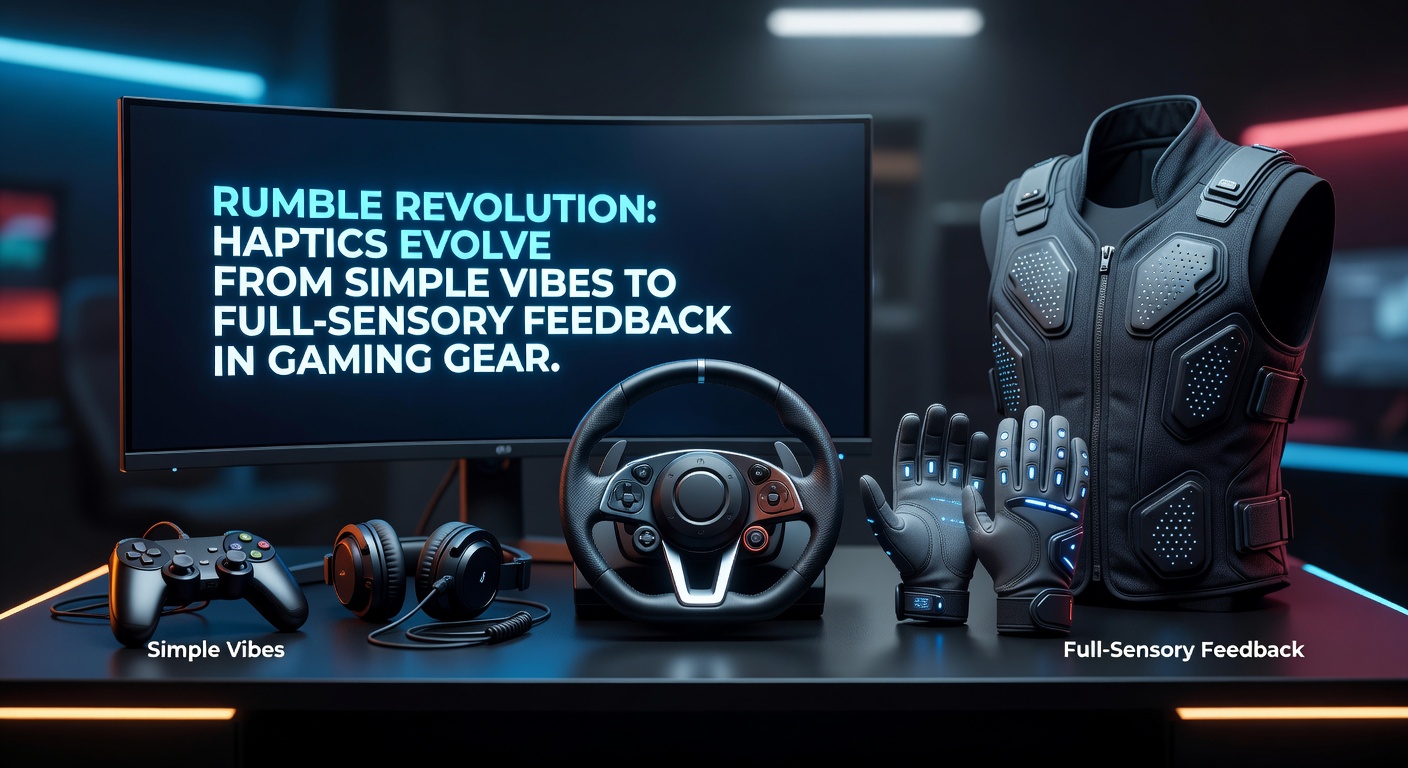
Now haptics stretch into multi-modal feedback, blending vibrations with resistance, temperature shifts, and even airflow; take the HaptX gloves showcased at CES 2023, which use microfluidics to simulate object textures and weights via 130+ micro-pins that deform realistically against fingertips. Developers integrate these into VR setups, where users gripping virtual swords feel blade edges or sword clashes with directional forces that match motion-capture data. And in April 2026, at the Game Developers Conference (GDC) in San Francisco, teams from Meta and Valve demoed prototypes combining electrostatic brakes for friction simulation alongside ultrasonic waves for airborne textures, pushing boundaries so players sense wind gusts or heat from fireballs without physical elements.
That's where the rubber meets the road for accessibility too; studies from the University of British Columbia reveal that advanced haptics aid visually impaired gamers by conveying spatial info through touch alone, with one experiment showing 40% faster navigation in maze-like VR environments when full-sensory cues activated. Figures from the Entertainment Software Association highlight how such innovations correlate with industry growth, as haptic-equipped titles saw 15% higher playtime averages in 2025 surveys.
Case Study: Astro's Playroom Redefines Controller as Canvas
Sony's Astro's Playroom, bundled with every PS5 since launch, serves as a showcase where the DualSense shines; players puddle-stomp through virtual puddles feeling water displacement ripple outward, or sand-surf down dunes with grains shifting under thumbs while adaptive triggers resist like tightening grips on a board. Experts who've dissected its implementation note over 500 unique haptic patterns triggered contextually, drawing from audio waveforms analyzed in real-time to sync vibrations precisely with environmental sounds. That level of detail turned a tech demo into a benchmark, influencing titles like Returnal where bullet impacts jolt controllers asymmetrically based on hit location.
VR and Motion Platforms Push Limits
In VR, bHaptics' TactSuit X40 vest deploys 40 vibration zones across torso and arms, syncing with games like Half-Life: Alyx to pulse where bullets graze or aliens lunge; combined with omnidirectional treadmills like Virtuix Omni, it creates full-body feedback loops that data shows reduce motion sickness by 25% through grounded sensory anchors. PC modders extend this further, retrofitting Steam Deck handhelds with piezoelectric films for ultra-fine textures, proving enthusiasts drive evolution when manufacturers lag.
Challenges and Standards on the Horizon
Battery drain poses a hurdle though, as precision actuators guzzle power—DualSense sessions drop 20% faster with haptics maxed, per independent tests—prompting chipmakers like Qualcomm to unveil Snapdragon efficiency cores in 2025 optimized for low-latency haptic rendering. Cost remains another barrier; high-end gloves retail over $1,000, limiting mass adoption, although economies of scale from partnerships like those between Logitech and haptic firm Tanvas are projected to halve prices by 2027.
Standardization efforts gain traction too; the Haptics Standards Group, backed by IEEE members, released version 2.0 protocols in late 2025, ensuring cross-platform consistency so a rain effect in one engine translates seamlessly to another's controller. Observers note this unification accelerates developer uptake, especially for cloud gaming where latency-sensitive feedback travels over networks.
Real-World Examples in Esports and Sim Racing
Esports arenas adopt adaptive gear rapidly; Fanatec's DD2 wheels deliver force feedback up to 25Nm torque, simulating tire grip loss on slick tracks during Formula 1 leagues, where pros report sharper lap times thanks to cues like curb vibrations telegraphing apexes. One pro racer at the 2026 iRacing World Championship cited haptic telemetry as key to shaving 0.5 seconds off personal bests, underscoring competitive edges from evolved tech.
Looking Ahead: 2026 Milestones and Beyond
April 2026 brings pivotal reveals, with Nintendo's next-gen Switch successor rumored to pack asymmetric haptics rivaling DualSense, per leaks corroborated by supply chain analysts; meanwhile, Razer unveils Project Esther at Computex, a modular haptic vest integrating Peltier elements for hot/cold sensations in shooters. Researchers at ETH Zurich predict full-sensory suits by 2030, leveraging graphene actuators for lightweight, skin-like feedback that responds to neural inputs via EEG headsets.
Industry reports forecast haptic market growth to $40 billion by 2028, driven by gaming's 3 billion global players seeking deeper immersion; that's the trajectory as simple vibes give way to symphonies of touch, reshaping how virtual realms engage the human body.
Conclusion
Haptics have journeyed from noisy buzzers to sophisticated sensory suites, transforming controllers into extensions of game worlds where every footfall, clash, and texture registers viscerally. Developers continue layering innovations—from microfluidics in gloves to AI-driven patterns in vests—while standards bridge platforms and efficiencies curb drawbacks. As demos at GDC 2026 affirm, the rumble revolution rolls on, embedding touch as gaming's fourth dimension and pulling players ever closer to the action.