16 Jul 2026
Ray Tracing Calibration Routines Recalibrating Shadow Rendering Pipelines for Competitive Multiplayer Map Visibility
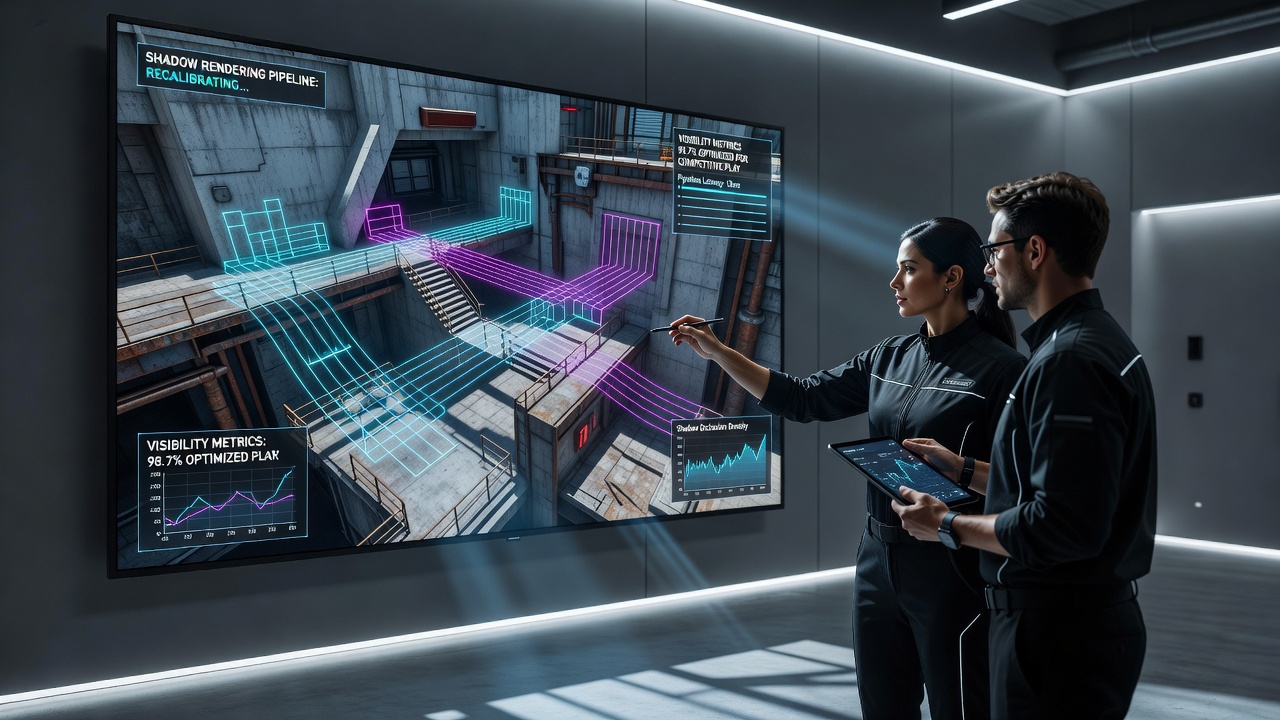
Developers working on competitive multiplayer titles have integrated ray tracing calibration routines that adjust shadow rendering pipelines to maintain consistent map visibility across player sessions, and these systems operate by tracing light paths in real time while recalibrating shadow boundaries to prevent visual discrepancies that could alter tactical decisions during matches. Research indicates that such calibration occurs at the start of each map load, where algorithms sample multiple ray directions per pixel and refine shadow maps to align with standardized visibility thresholds established by tournament organizers.
Core Mechanics of Ray Tracing in Multiplayer Contexts
Ray tracing calculates intersections between virtual light rays and scene geometry to produce accurate shadows, yet in multiplayer environments the process demands constant recalibration because player positions shift rapidly and server synchronization must preserve identical shadow outputs for all participants. Observers note that pipelines incorporate dynamic resolution scaling, which reduces ray samples in high-motion areas while increasing them near critical map features like chokepoints or objective zones, and this approach stems from performance data collected during closed beta tests conducted throughout early 2026.
Calibration routines monitor GPU load metrics and adjust shadow cascade distances accordingly, ensuring that distant shadows retain enough fidelity to reveal enemy outlines without introducing latency spikes that exceed acceptable tournament thresholds. Data from industry benchmarks shows these routines typically complete within 16 milliseconds on current-generation hardware, allowing seamless integration into 60 frames per second rendering cycles common in esports titles.
Recalibration Techniques for Shadow Consistency
Engineers implement feedback loops that compare rendered shadow outputs against reference frames generated on reference hardware, and when deviations exceed predefined tolerances the system triggers targeted recalibration passes that redistribute ray budgets across shadow-casting objects. Take one development team that documented how recalibrating only the penumbra regions around moving characters reduced artifact variance by measurable margins during internal testing, while full-scene recalibrations were reserved for map transitions or major lighting changes.
Those who've examined the underlying code structures know that temporal accumulation buffers play a central role, blending previous frame shadow data with newly traced samples to smooth transitions and maintain visibility parity across networked clients. Researchers at various institutions have published metrics indicating that such blending techniques cut shadow flicker incidents by substantial percentages in large-scale matches involving dozens of simultaneous players.
Impact on Competitive Map Visibility Standards
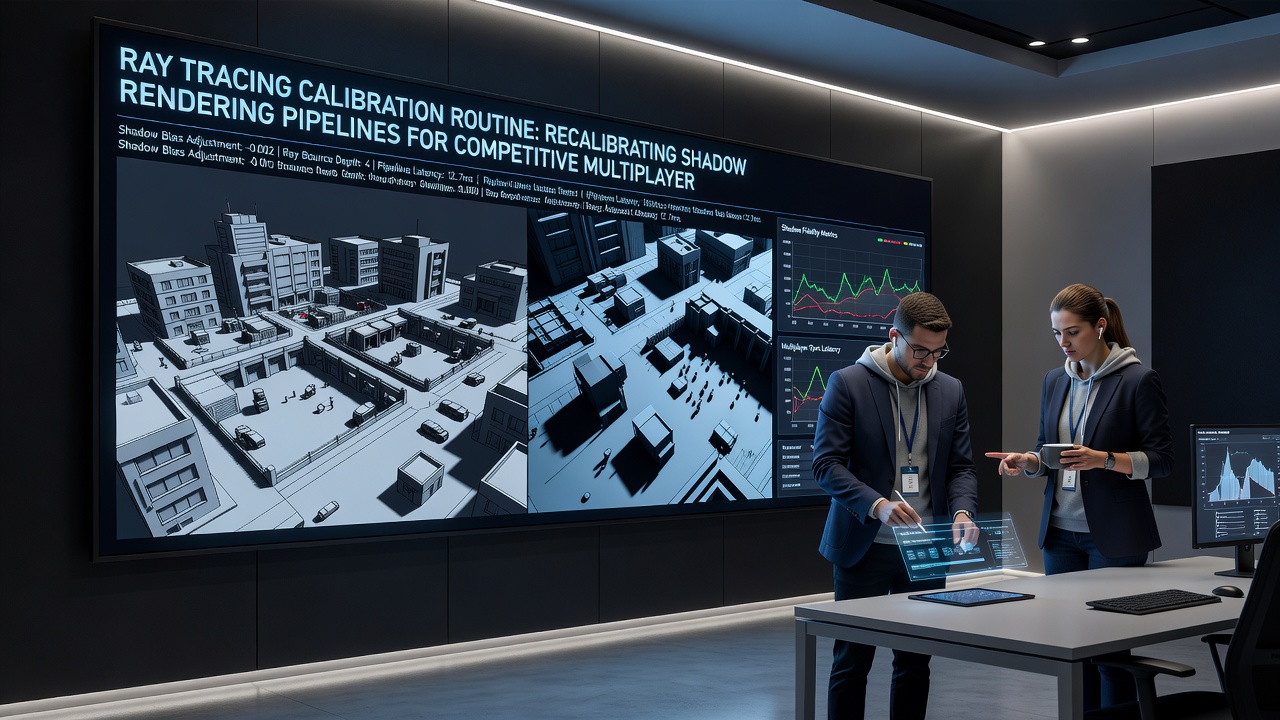
Map visibility in competitive play hinges on uniform shadow behavior because uneven darkness can obscure or reveal player models inconsistently, prompting governing bodies to require calibration verification before sanctioned events. In July 2026 several regional leagues adopted updated testing protocols that mandate automated ray tracing calibration logs be submitted alongside match recordings, and these logs allow officials to confirm that no pipeline drift occurred during play.
Pipeline recalibrations also address edge cases such as dynamic weather effects or destructible environments, where shadow patterns change mid-match, by running localized calibration on affected geometry clusters only. Evidence suggests this selective approach preserves overall frame rates while upholding the visibility equity demanded by professional circuits, and similar methods appear in documentation from both North American and European development studios.
Integration Examples Across Major Titles
One widely cited implementation appears in simulation-focused multiplayer platforms that layer calibration routines atop existing deferred rendering paths, allowing shadow updates to occur in parallel with geometry culling passes. Another case involves arena-style shooters where experts applied machine learning models trained on thousands of prior matches to predict optimal ray distribution patterns, resulting in faster convergence during recalibration cycles according to reports shared at industry gatherings.
Academic analyses from groups including the SIGGRAPH proceedings archive have examined how these routines scale across different network conditions, while data released by the Eurographics Association highlights performance consistency achieved through synchronized calibration timestamps between client and server instances.
Conclusion
Ray tracing calibration routines continue to evolve as hardware capabilities advance, delivering recalibrated shadow pipelines that support equitable map visibility in competitive multiplayer settings. The techniques described rely on precise sampling, temporal blending, and selective recalibration to meet the strict requirements of organized play, and ongoing refinements ensure these systems remain compatible with emerging rendering standards projected through the remainder of the decade.