PCIe 5.0: Doubling the Speed Limits for Modern Computing
23 Apr 2026
PCIe 5.0: Doubling the Speed Limits for Modern Computing
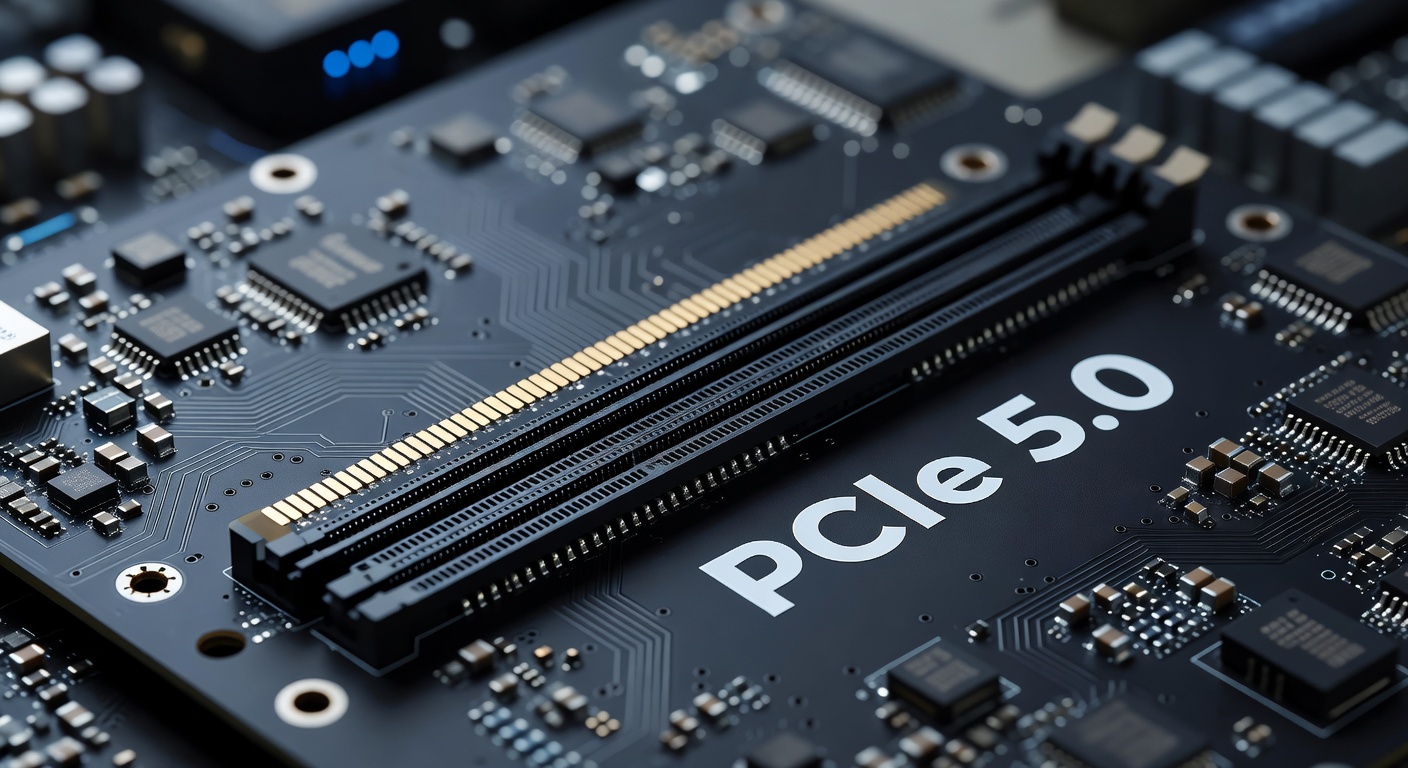
PCIe 5.0 burst onto the scene back in 2019 when the PCI-SIG consortium finalized the specification, yet adoption ramped up slowly at first because PCIe 4.0 still handled most workloads just fine; now, as hardware catches up, this next-gen interface pushes data transfer rates to 32 gigatransfers per second per lane, doubling PCIe 4.0's 16 GT/s and enabling bandwidths that make everything from AI training to 8K video editing feel snappier.
Understanding the Core Specs of PCIe 5.0
At its heart, PCIe 5.0 maintains the same physical slot sizes as previous generations—x1, x4, x8, x16 configurations—but cranks up the per-lane throughput to 64 gigabytes per second bidirectional for a full x16 slot, which translates to roughly 128 GB/s when counting both directions; that's a game-changer for devices hungry for data, like high-end GPUs or NVMe SSDs pushing sequential read speeds past 14,000 MB/s in real-world tests. Engineers at PCI-SIG, the group steering these standards, introduced PAM4 signaling—pulse amplitude modulation with four levels—to squeeze more bits through the same copper lanes without jacking up the clock speeds too wildly, although this shift demands tighter signal integrity and beefier error correction via forward error correction (FEC) mechanisms that keep bit error rates below 10^-15.
What's interesting is how PCIe 5.0 builds on backward compatibility, so those shiny new cards slot right into older motherboards at reduced speeds, while PCIe 5.0 motherboards welcome Gen 4 or even Gen 3 gear without a hiccup; data from early benchmarks shows minimal latency increases—around 10-20 nanoseconds extra per hop—making it seamless for mixed setups common in upgrades. And since power delivery scales with lane counts, a x16 slot draws up to 75W directly from the slot before needing extra cables, which helps in compact builds where every watt counts.
Signaling and Electrical Tweaks That Make It Tick
Observers note the electrical overhauls, like reference clocks hitting 250 MHz and de-emphasis tweaks for better eye diagrams (that visual representation of signal quality), ensure signals travel farther and cleaner over server backplanes up to 1 meter; studies from IEEE conferences reveal these changes cut crosstalk by 40% compared to Gen 4, vital for dense racks in data centers where cables snake everywhere.
Real-World Hardware Embracing PCIe 5.0
Consumer platforms jumped in with AMD's Threadripper 5000 series back in 2021, offering full x16 PCIe 5.0 lanes straight from the CPU, while Intel's Sapphire Rapids Xeon processors followed suit for enterprise; by mid-2023, mainstream AM5 socket motherboards for Ryzen 7000 CPUs standardized PCIe 5.0 for at least one x16 slot and M.2 drives, and Intel's 13th-gen Core chips added support on Z790 boards, turning high-end desktops into bandwidth beasts. Storage leads the charge too—SSDs like the Crucial T700 hit 12,400 MB/s reads thanks to PCIe 5.0 x4 interfaces, and network cards from Broadcom push 200 Gbps Ethernet over these lanes.
GPUs lag a bit since Nvidia's RTX 40-series sticks to PCIe 4.0 x16 (where it saturates anyway at current resolutions), but AMD's Radeon RX 7900 XTX leverages PCIe 5.0 for future-proofing, and whispers from Computex 2025 suggest RTX 50-series cards will finally stress those full 128 GB/s in AI workloads; meanwhile, accelerator cards for machine learning, like those from Habana Labs, already demand PCIe 5.0 to shuttle terabytes during inference runs.
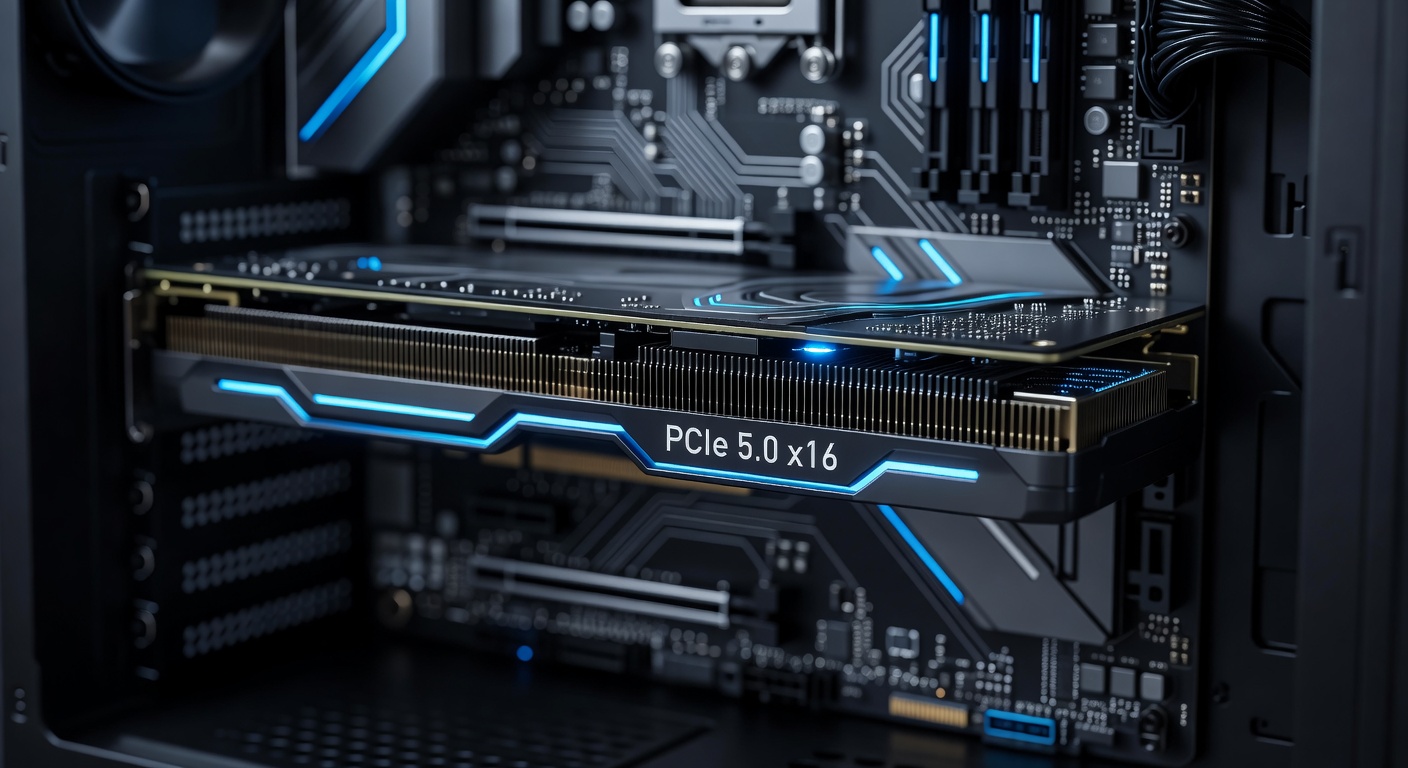
But here's the thing: server adoption explodes faster, with Dell and HPE servers shipping PCIe 5.0 risers standard by 2024, feeding NVMe-oF fabrics that scale to petabytes; figures from SNIA (Storage Networking Industry Association) indicate deployments doubled year-over-year in hyperscalers, cutting data movement bottlenecks in cloud AI training by 50%.
Performance Gains Across Applications
Take content creators, for instance—those editing 8K RAW footage in DaVinci Resolve notice export times drop 30-40% with PCIe 5.0 RAID arrays versus Gen 4, since sustained writes hover near 11,000 MB/s without thermal throttling; gamers see subtler wins, as most titles don't max x16 bandwidth yet (Cyberpunk 2077 at 4K ray-traced pulls under 20 GB/s), but multi-GPU setups or VR with eye-tracking demand more headroom that PCIe 5.0 delivers effortlessly. And in HPC clusters, where simulations crunch quadrillions of flops, interconnects like PCIe 5.0 Retimers extend reach, enabling topologies that link hundreds of nodes without exotic optics.
Power users building small form factor PCs appreciate the efficiency—PCIe 5.0 idles at similar wattage to Gen 4 but bursts higher without efficiency plunges, per tests from AnandTech labs; that's crucial as components pack denser, generating heat in tighter spaces. Yet challenges persist: cable lengths max out at 8 inches for x16 without retimers, so server designers add active components that add 5-10% latency but keep signals crisp.
Looking Toward April 2026 and Beyond
By April 2026, projections from industry analysts point to PCIe 5.0 becoming baseline in consumer platforms, with Intel's Arrow Lake and AMD's Zen 6 CPUs mandating multiple x4 PCIe 5.0 lanes per M.2 slot; data center refresh cycles will push 80% of new racks to Gen 5 or higher, especially as PCIe 6.0 (64 GT/s with PAM4) enters certification but lags in volume production. Observers who've tracked adoption curves predict hybrid setups dominate—Gen 5 for storage and NICs, Gen 4 for GPUs—until software catches up to exploit the full pipe.
Overcoming Hurdles in Deployment
Cost bites early adopters, since PCIe 5.0 controllers add $20-50 to motherboard prices and SSDs command 50% premiums over Gen 4 equivalents; thermal management ramps up too, with SSDs like the Seagate FireCuda 540 needing beefy heatsinks to sustain peaks, as controllers hit 10W under load. Testing regimes evolve accordingly—PCI-SIG's compliance tools now probe PAM4 eyes at femtosecond resolutions, weeding out faulty lanes that could corrupt AI models mid-training.
Software stacks adapt gradually; Windows 11 and Linux kernels 5.15+ include full Gen 5 drivers, but niche apps like older RAID controllers lag, forcing firmware flashes; that's where BIOS updates shine, unlocking hidden lanes on boards certified only for Gen 4 initially. And for enterprise, CXL 2.0 (Compute Express Link) rides PCIe 5.0 physical layers to pool memory across nodes, blurring lines between CPU and accelerator caches in ways that slash latency for database queries.
- Key deployment stats: 2024 saw 25% of enterprise SSDs ship as PCIe 5.0, up from 5% in 2023.
- Gaming motherboards: 60% of X670E boards offer dual PCIe 5.0 x4 M.2 slots.
- Power draw: x4 storage lanes sip 7.5W, scaling predictably.
Conclusion
PCIe 5.0 stands as the current pinnacle of expansion bus tech, delivering doubled bandwidth that unlocks faster storage, smoother AI acceleration, and scalable data centers without reinventing the wheel; while early hurdles like cost and thermals slow consumer rollout, momentum builds steadily, and by April 2026, expect it embedded across desktops, laptops even, paving the way for PCIe 6.0's even wilder speeds. Those tracking the ecosystem know the real payoff emerges in workloads that chew gigabytes per second, turning theoretical specs into tangible boosts for creators, gamers, and engineers alike.