30 Jun 2026
Mapping Thermal Interface Optimizations for Sustained Clock Stability During Extended Esports Practice Sessions on Compact Rigs
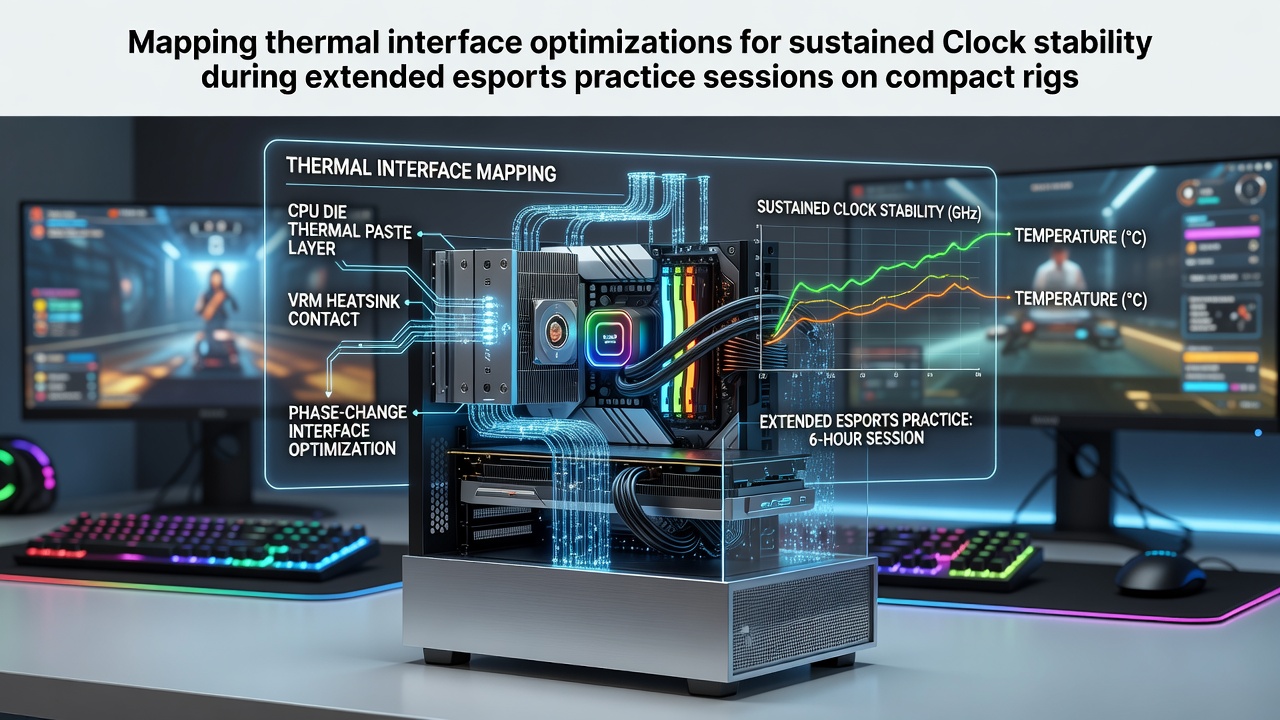
Compact esports rigs face unique thermal challenges during long practice sessions where processors must maintain consistent clock speeds without throttling. Researchers have mapped specific thermal interface optimizations that address heat transfer between dies and heat spreaders in small form factor builds. Data from hardware testing indicates that precise application of thermal interface materials can reduce core temperatures by several degrees Celsius which in turn supports stable boost frequencies over periods exceeding four hours.
Core Principles of Thermal Interface Mapping
Thermal interface materials fill microscopic gaps between processors and cooling solutions yet their effectiveness depends on thickness uniformity and material composition. Engineers at various research institutions have documented how excessive paste application creates insulating layers while insufficient coverage leads to hot spots that trigger frequency reductions. Observers note that mapping involves systematic testing of application patterns including cross, dot, and spread methods across different processor architectures common in esports hardware. Those who've examined compact systems know that airflow restrictions amplify the need for optimized interfaces because traditional tower coolers often cannot fit in these enclosures.
Studies conducted through 2025 revealed that phase change materials and liquid metal compounds deliver measurable improvements in heat dissipation rates compared with standard silicone-based pastes. Figures from controlled benchmarks show junction temperature drops of up to eight degrees under sustained loads equivalent to marathon training sessions in competitive titles. This stability allows graphics processing units and central processing units to avoid power limit throttling that otherwise disrupts frame delivery consistency.
Application Techniques for Compact Builds
Technicians apply thermal compounds using precision tools to achieve uniform coverage across dies measuring under twenty square millimeters in many mobile-derived components used in small rigs. Multiple application layers require careful cleaning between sessions because residue buildup alters conductivity over repeated maintenance cycles. Data collected from tournament preparation environments demonstrates that reapplication intervals of three to six months maintain optimal performance when users follow manufacturer torque specifications for mounting pressure.
Compact cases limit radiator sizes and fan configurations so every degree of thermal headroom becomes critical for sustained operation. Research teams have identified hybrid approaches combining graphite sheets with traditional pastes that route heat toward case panels acting as passive dissipators. These methods prove especially relevant in setups where extended practice occurs without active monitoring of temperatures.
Performance Data from Extended Sessions
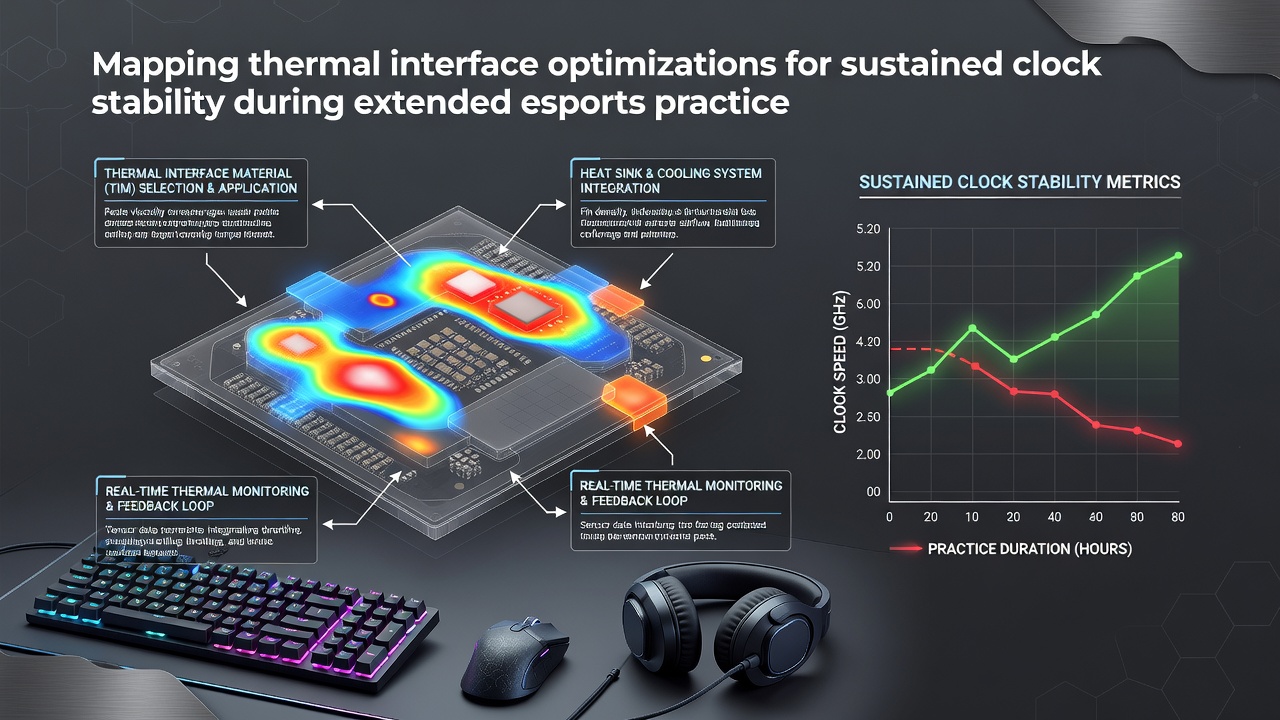
Benchmarks performed on systems configured for games requiring rapid input response show that optimized interfaces sustain clock speeds within two percent of peak values throughout six-hour sessions. In contrast unoptimized builds experience gradual declines starting around the ninety-minute mark due to accumulated heat. European research consortia tracking hardware in professional training facilities reported average improvements in consistency metrics when teams adopted mapped application protocols.
Power delivery components also benefit indirectly because lower die temperatures reduce overall system load on voltage regulators. This chain reaction contributes to fewer interruptions during practice blocks scheduled around competitive calendars. Industry reports from North American hardware labs confirm similar patterns across multiple processor generations released through early 2026.
Integration with Monitoring Tools
Software utilities now incorporate thermal mapping data to provide real-time guidance on interface condition through sensor fusion. Users receive alerts when predicted temperature rises exceed thresholds established during laboratory validation. Such tools draw from datasets compiled by academic groups studying heat transfer in constrained environments and allow adjustments before stability issues arise during live sessions.
June 2026 updates to several popular monitoring platforms incorporated refined algorithms based on field data gathered from compact rig deployments worldwide. These enhancements help practitioners maintain clock stability without requiring constant manual intervention in thermal settings.
Conclusion
Systematic mapping of thermal interface optimizations provides measurable support for sustained clock performance in compact esports rigs during prolonged practice. Evidence from multiple testing regimes highlights the role of material selection and application precision in managing heat under continuous loads. Continued refinement of these techniques aligns with evolving hardware designs and supports consistent operation across extended training periods.