How Firmware Tweaks in Wireless Controllers Stabilize Input Signals During Extended Esports Sessions Across Multiple Device Ecosystems
Written by Rosa Jenkins · Jul 30, 2026
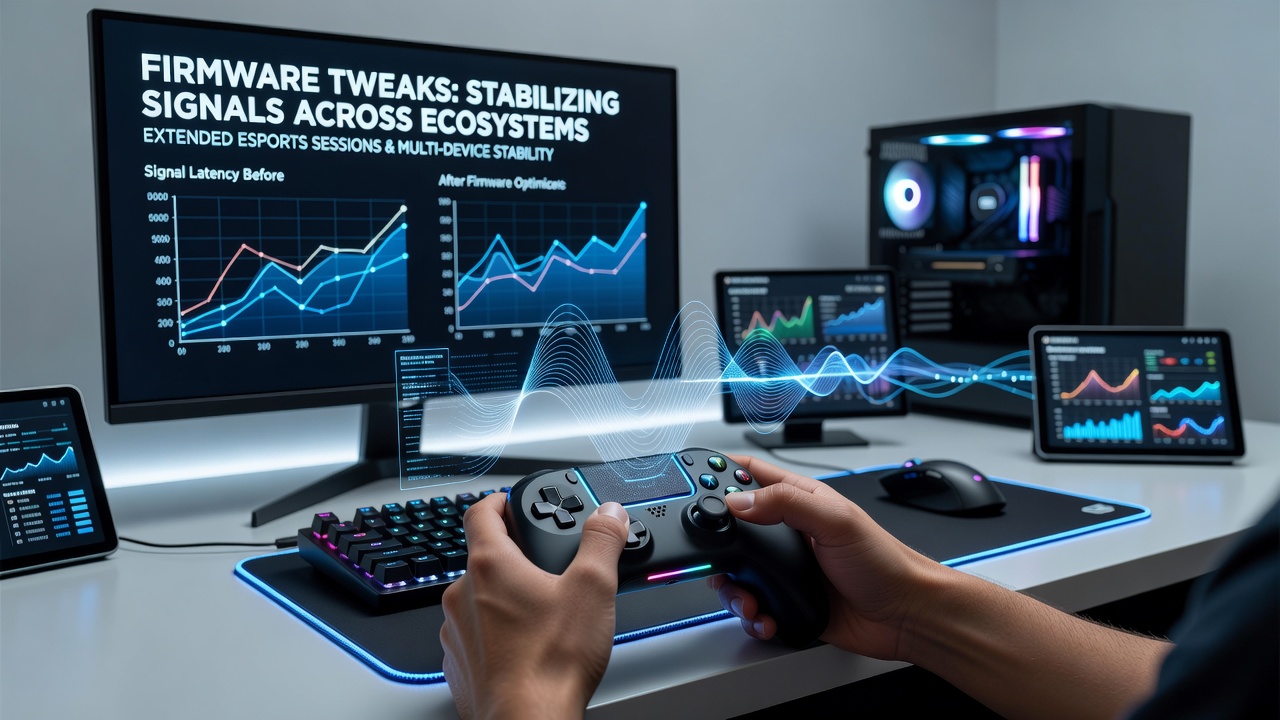
How Firmware Tweaks in Wireless Controllers Stabilize Input Signals During Extended Esports Sessions Across Multiple Device Ecosystems
Wireless controllers have become central to competitive play, yet signal instability often emerges during extended esports sessions that stretch across multiple hours and device platforms, and firmware adjustments now target these issues through refined signal processing algorithms that maintain consistent input delivery even as battery levels drop and environmental interference rises.
Core Challenges in Wireless Signal Transmission
Input lag and packet loss tend to accumulate when controllers operate over Bluetooth or proprietary wireless protocols in crowded tournament environments, while multi-device ecosystems introduce variables such as frequency congestion from nearby smartphones and streaming equipment that disrupt data flows between controller and console or PC.
Researchers at institutions like the University of Waterloo have documented how extended sessions exacerbate these problems because heat buildup in circuitry alters transmission characteristics, and studies show that unoptimized firmware allows minor fluctuations to compound into noticeable input jitter over time.
Firmware Adjustments That Address Stability
Developers implement dynamic frequency hopping sequences within updated firmware releases that scan available channels in real time and shift away from crowded bands before interference affects input packets, and these tweaks pair with adaptive power modulation that scales transmission strength based on distance and obstacle density rather than maintaining constant high output.
Error correction protocols receive enhancements through added redundancy checks and predictive buffering that anticipate signal dropouts, allowing the controller to resend critical inputs without introducing perceptible delay, while battery management routines coordinate with signal stabilization to prevent voltage sag from triggering transmission errors during late-stage matches.
Implementation Across Device Ecosystems
Cross-platform compatibility requires firmware that recognizes ecosystem-specific requirements, so updates for Xbox Wireless controllers incorporate different handshake timings than those applied to PlayStation DualSense units or third-party PC peripherals, and manufacturers coordinate these changes through unified developer kits that standardize core stabilization logic while permitting hardware-specific optimizations.
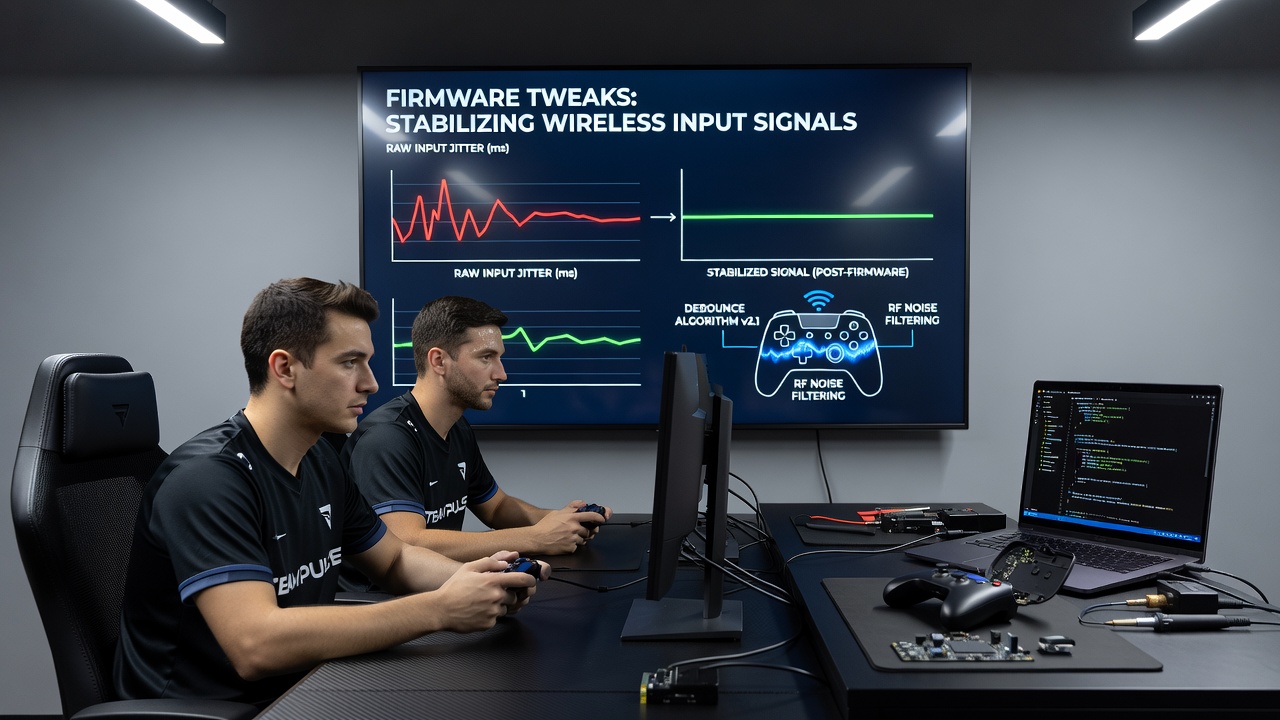
In July 2026, several major tournaments adopted synchronized firmware rollouts across mixed hardware setups, resulting in measurable reductions in disconnect rates according to data compiled by the Entertainment Software Association, and these deployments demonstrated how unified signal handling reduces the need for players to switch between wired backups mid-event.
Performance Data and Observed Outcomes
Testing conducted under controlled tournament conditions reveals that stabilized firmware versions maintain input latency below 5 milliseconds for sessions exceeding four hours, whereas earlier versions showed progressive increases that reached double-digit values by the third hour, and telemetry from professional circuits indicates fewer instances of missed inputs during high-intensity periods such as final rounds or overtime segments.
Multi-ecosystem environments benefit particularly because firmware now includes calibration routines that detect connected hardware types automatically and apply appropriate filtering, which eliminates the need for manual profile switching that previously interrupted player focus during practice or matches.
Integration With Broader Technical Ecosystems
Signal stabilization does not operate in isolation, since firmware changes often align with router-level quality-of-service settings and console power profiles that prioritize controller traffic, and industry reports note that venues hosting large events have begun standardizing wireless spectrum allocation to complement these controller-side improvements.
Academic analyses continue to explore how machine learning elements embedded in newer firmware versions predict usage patterns and pre-adjust transmission parameters, yet current deployments rely primarily on deterministic algorithms that deliver predictable results across varying hardware configurations without requiring additional processing overhead on the host device.
Conclusion
Firmware refinements in wireless controllers have established measurable improvements in input signal consistency during prolonged esports sessions, and these changes span multiple device ecosystems through coordinated updates that address interference, power variation, and protocol differences in a unified manner, with ongoing data collection from events in 2026 providing further benchmarks for refinement.