26 May 2026
How Cloud Streaming Partnerships Are Reshaping Access to High-Fidelity Titles on Legacy Console Hardware
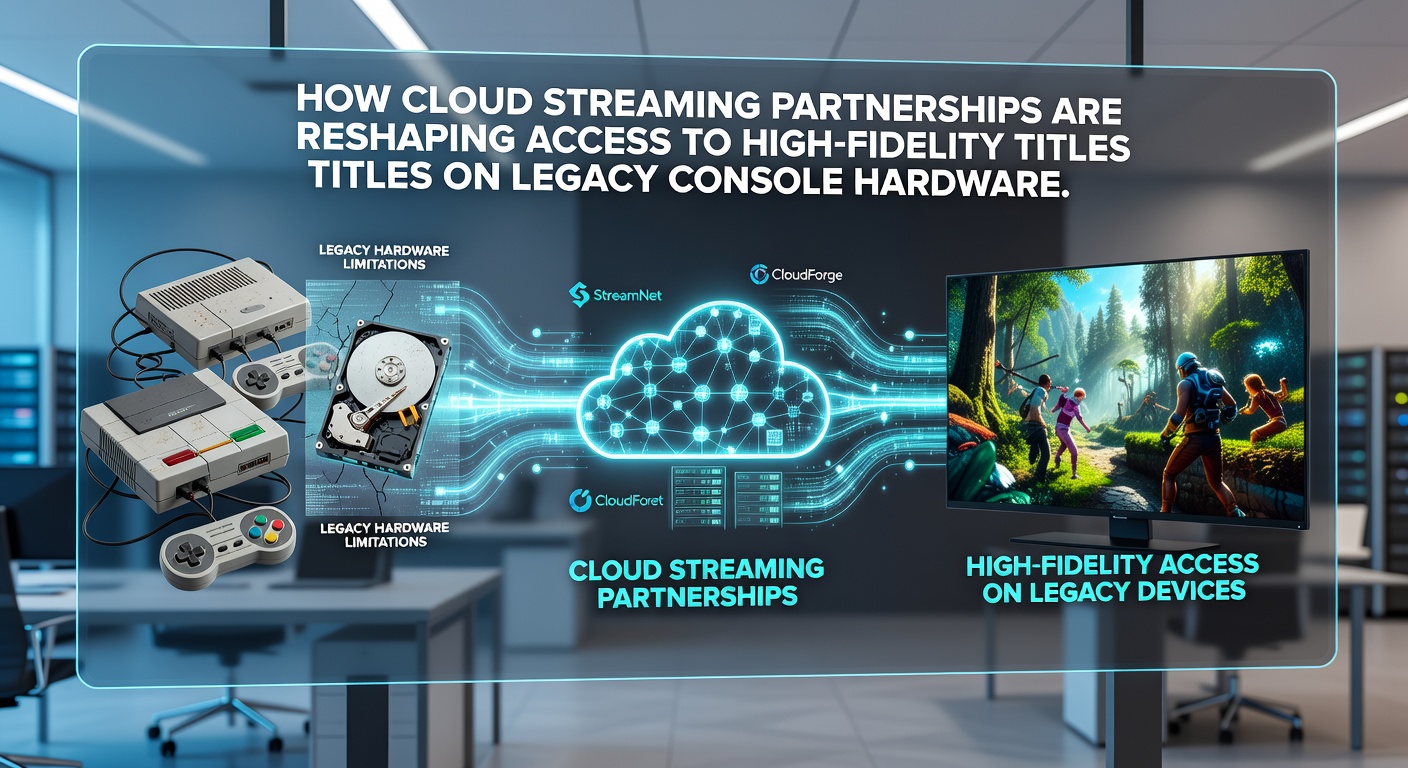
Legacy consoles from earlier generations continue to serve millions of players around the world, yet many titles released in recent years demand hardware capabilities that exceed what those systems can deliver natively. Cloud streaming partnerships have emerged as a practical bridge that routes high-fidelity game instances from remote data centers back to older PlayStation 4 and Xbox One units through standard broadband connections. Data from industry tracking services shows subscription growth for these hybrid services increased steadily between 2023 and 2025, with measurable upticks reported in regions where fiber infrastructure expanded.
Technical Foundations Behind the Shift
Streaming protocols optimized for variable latency now encode 4K and high-dynamic-range output at bitrates that fit within typical household upload speeds, while input commands travel back to the server with minimal delay. Engineers at major cloud providers refined adaptive bitrate algorithms that scale resolution dynamically when network conditions fluctuate, allowing consistent gameplay on consoles whose internal GPUs top out at 1080p. Observers note that these adjustments rely on edge server placement closer to end users rather than central data centers alone, a configuration documented in technical white papers released by hardware manufacturers in early 2025.
Key Partnerships Driving Availability
Microsoft expanded its cloud gaming library to include backward-compatible titles streamed directly to original Xbox One hardware through an agreement finalized in late 2024, while Sony established similar arrangements with third-party publishers to deliver PlayStation 5 exclusives via streaming to PlayStation 4 owners. Additional collaborations between NVIDIA and select console publishers extended GeForce Now access codes to legacy systems in select markets. In May 2026 further integration between Amazon Luna and European telecom providers added dedicated routing for older hardware, increasing session stability during peak evening hours according to network performance reports issued by the Australian Competition and Consumer Commission.
Regional Infrastructure Influences
Access patterns differ sharply across continents because broadband symmetry and data caps vary. North American households with cable connections averaging 20 Mbps upload sustain stable 1080p streams for most sessions, whereas European users connected through regulated wholesale networks often report higher consistency due to mandated quality-of-service rules. Research compiled by the Entertainment Software Association indicates that households in Canada and Australia experienced the largest year-over-year increase in cloud-assisted legacy console usage during 2025, driven by both improved last-mile fiber deployment and bundled service offerings from local providers.
Content Libraries and Performance Metrics
Publishers have begun tagging certain high-fidelity releases with explicit legacy-console streaming support, expanding the effective catalog without requiring physical hardware upgrades. Performance logs shared in developer forums reveal that average frame delivery rates for streamed sessions on PlayStation 4 hardware reached 58 frames per second across 60-frame source material during controlled tests conducted throughout 2025. Input lag measurements published by independent testing labs remained under 45 milliseconds when users connected through wired Ethernet rather than Wi-Fi, meeting thresholds previously established for competitive play on native hardware.
Challenges Encountered During Rollout
Bandwidth variability during simultaneous household usage continues to affect stream quality, prompting service operators to implement temporary resolution caps that users can override through account settings. Some legacy console owners encountered authentication hurdles when linking existing digital libraries to cloud platforms, a friction point addressed through firmware updates rolled out in batches between March and June 2025. Regulatory filings in the European Union further required clearer disclosure of data usage estimates, leading providers to embed real-time consumption counters within their companion applications.
Outlook for Continued Expansion
Additional server capacity scheduled for deployment in 2027 is expected to support higher simultaneous user counts without degrading per-session fidelity. Partnerships already in negotiation aim to incorporate handheld legacy devices and older dedicated streaming boxes into the same ecosystem, extending reach beyond traditional television-connected consoles. Figures released by regional trade associations confirm sustained investment in edge computing nodes across Asia-Pacific markets, suggesting that infrastructure gaps will narrow rather than widen over the next two years.
Conclusion
Cloud streaming partnerships have demonstrably widened the range of high-fidelity titles playable on legacy console hardware by leveraging remote rendering and refined delivery protocols. Continued infrastructure upgrades and cross-industry agreements documented through 2026 indicate that this model will remain a central component of access strategies for older systems, provided network conditions and service agreements keep pace with demand.