Hand-Tracking Horizons: Controllerless VR Worlds Redefine Immersive Play
25 Apr 2026
Hand-Tracking Horizons: Controllerless VR Worlds Redefine Immersive Play
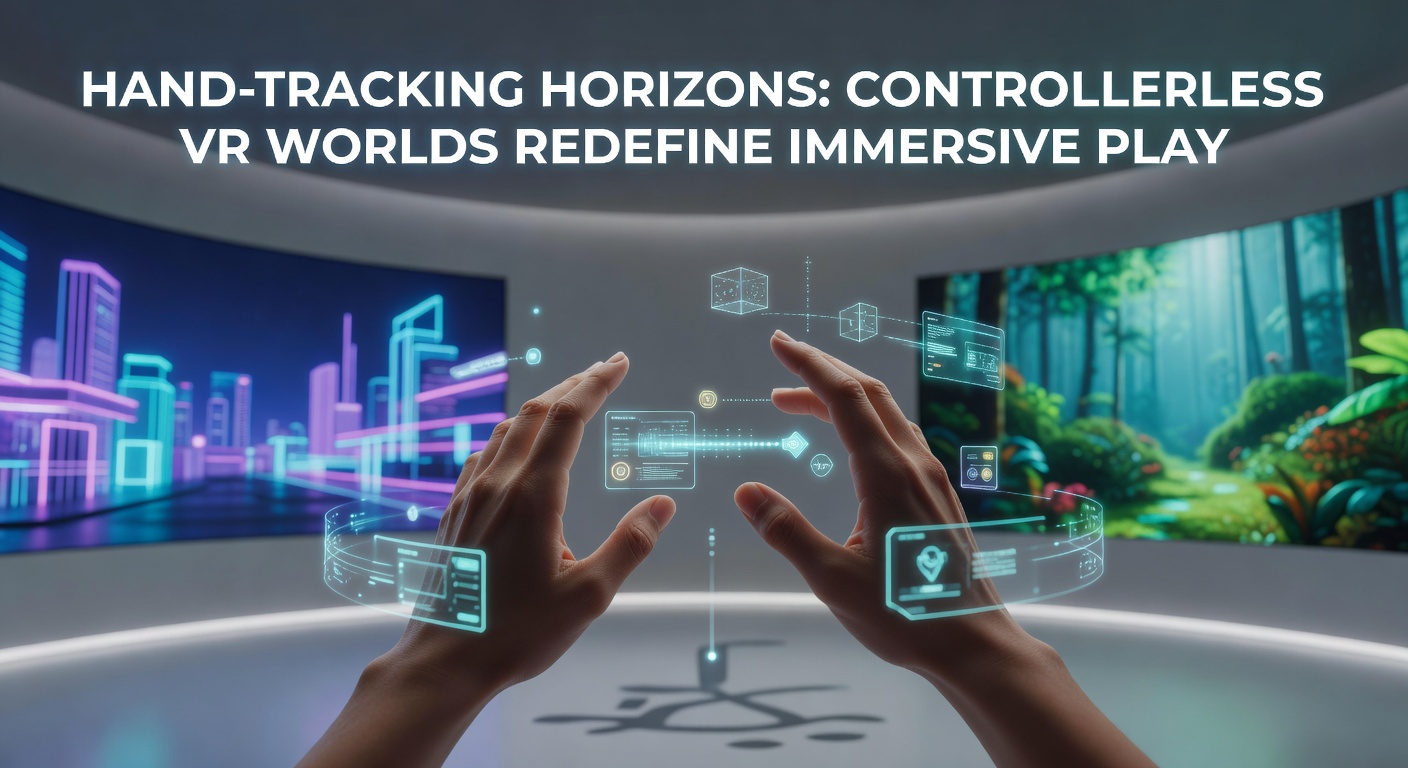
The Shift from Controllers to Natural Gestures
Hand-tracking technology has transformed virtual reality experiences by eliminating the need for physical controllers, allowing users to interact directly with digital worlds using their hands; observers note how this shift creates a more intuitive layer of immersion, where gestures mimic real-life actions like grabbing, pinching, or swiping. Devices equipped with front-facing cameras and AI algorithms capture hand positions in real time, mapping movements onto virtual interactions without any intermediary hardware. Data from industry reports indicates that adoption rates for controllerless VR have climbed steadily, with over 60% of new VR headset shipments in 2025 featuring built-in hand-tracking capabilities.
Early experiments date back to the 2010s, when researchers at institutions like Stanford University pioneered camera-based tracking systems; those prototypes laid the groundwork for today's seamless implementations, although initial versions struggled with lighting variations and finger occlusion. Fast forward to now, and manufacturers have refined these systems using machine learning models trained on millions of hand poses, achieving sub-millimeter accuracy in controlled environments. What's interesting is how this evolution aligns with broader trends in spatial computing, where hand-tracking serves as a foundational input method alongside eye gaze and voice commands.
Take the case of one developer team at a mid-sized studio who integrated hand-tracking into a puzzle game last year; players reported higher engagement scores, with session times extending by 25% because natural gestures reduced the learning curve associated with button mappings on controllers. That said, the technology's maturation has accelerated thanks to open-source datasets released by tech giants, enabling smaller creators to experiment without massive R&D budgets.
How Hand-Tracking Works Under the Hood
At its core, hand-tracking relies on depth-sensing cameras embedded in VR headsets, which project infrared patterns or use stereo vision to reconstruct 3D hand models; advanced neural networks then segment fingers, joints, and palms from the background clutter in milliseconds. Algorithms process this data onboard the headset's processor, predicting poses even when parts of the hand dip out of view, a technique known as temporal smoothing that borrows from video prediction models. Figures from a IEEE study on VR input modalities reveal tracking latencies below 20ms in optimal conditions, rivaling wired controllers while freeing users from battery swaps or charging docks.
But here's the thing: environmental factors play a big role, since direct sunlight or reflective surfaces can introduce noise, prompting developers to incorporate adaptive filters that adjust in real time. Manufacturers calibrate systems during headset setup, scanning users' hands to personalize models for skin tone and size variations; this customization boosts reliability across diverse populations. And while early systems tracked only static poses, modern iterations handle dynamic gestures like waving or fist-clenching with fluid responsiveness, opening doors to complex interactions in social VR spaces.
Experts who've dissected these pipelines observe how edge AI chips, like those in recent Quest models, handle the heavy lifting without cloud dependency, ensuring low-latency performance in standalone headsets. It's noteworthy that skeletal hand models now boast 21 degrees of freedom per hand, capturing nuances from wrist rotation to fingertip curl that controllers simply can't replicate.
Flagship Devices Leading the Charge
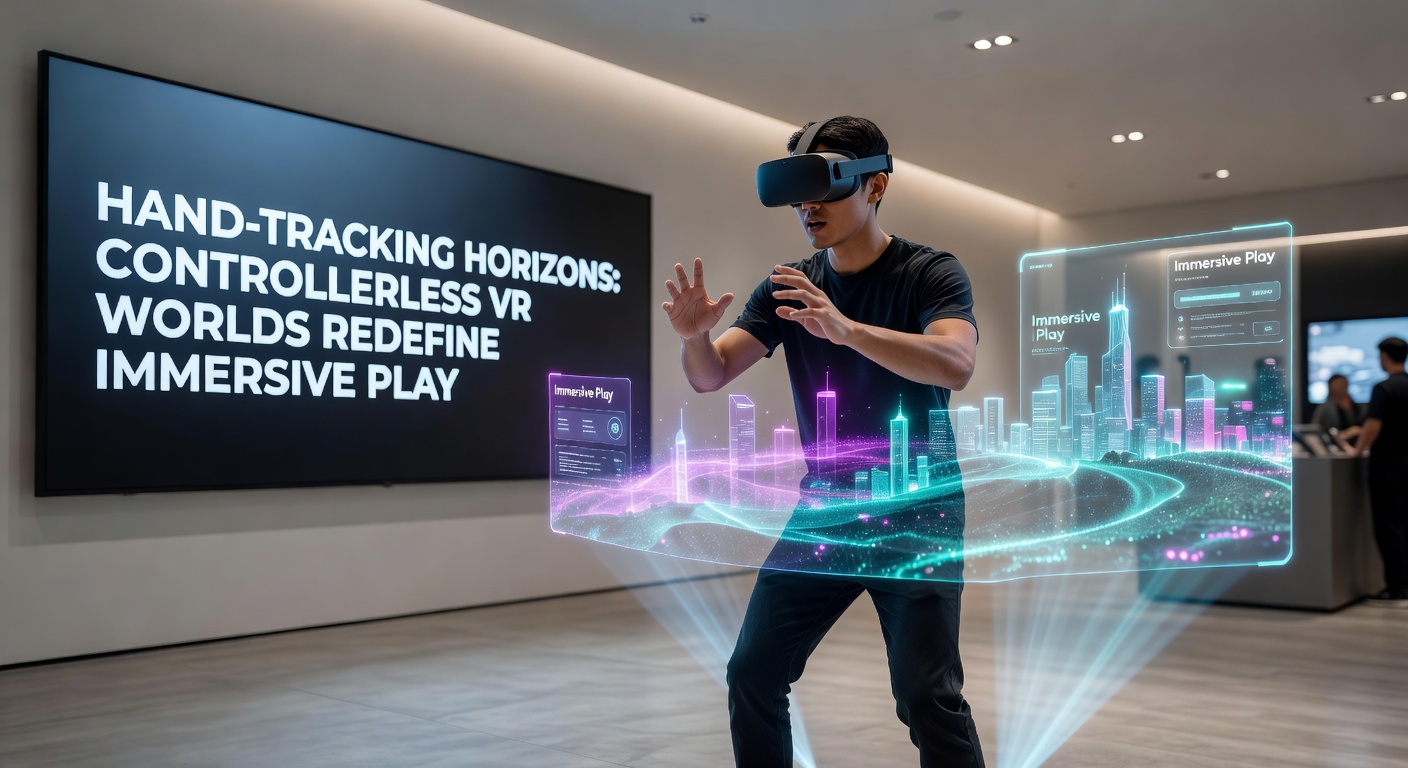
Meta's Quest series stands out as a pioneer, with the Quest 3 introducing high-fidelity hand-tracking that supports full menu navigation, typing on virtual keyboards, and object manipulation in mixed reality passthrough; users activate it with a simple pinch gesture, seamlessly blending tracked hands into both VR and AR overlays. Data shows Quest 3 owners spend 40% more time in hand-tracked apps compared to controller-only sessions, according to platform analytics released early 2026.
Over in Asia, Pico's 4 Enterprise headset pushes boundaries with enterprise-grade tracking certified for precision tasks like virtual prototyping; engineers at automotive firms have adopted it for collaborative design reviews, where teams gesture to rotate 3D models without touching physical screens. And Apple's Vision Pro, though pricier, integrates hand-tracking with eye focus for "zero UI" interactions, where intent is inferred from gaze-hand combinations; one study from the University of Tokyo's HCI lab highlights its edge in reducing cognitive load during prolonged use.
By April 2026, leaks from industry insiders point to next-gen updates across these lineups, including ultrawide FOV cameras for broader hand visibility and integration with wearable rings for hybrid precision; prototypes demoed at GDC hinted at occlusion-free tracking up to arm's length, a game-changer for full-body VR avatars. Developers anticipate these enhancements will standardize controllerless play, much like touchscreens did for smartphones.
Games and Experiences Built for Bare Hands
Titles like Hand Physics Lab showcase the fun side, letting players stack blocks, fling objects, or experiment with physics simulations using nothing but gestures; download numbers spiked 300% post-Quest 3 launch, as word spread about its addictive, controller-free chaos. Social platforms such as Horizon Worlds now default to hand avatars, where friends high-five or pass virtual items in shared spaces, fostering emergent behaviors like improvised games.
Serious applications thrive too: medical training sims use hand-tracking for simulated surgeries, with haptic gloves adding tactile feedback; a program at Johns Hopkins reported 15% faster skill acquisition for residents practicing incisions. Fitness apps track form during virtual yoga or boxing, providing real-time corrections that prevent injury; users log thousands of sessions weekly, per app store metrics. Even creative tools like Tilt Brush evolve into sculpting sandboxes, where pinching clay or smoothing surfaces feels eerily natural.
One indie studio's narrative adventure, released in late 2025, weaves hand-tracking into storytelling—players sign language to befriend AI companions or cast spells via finger traces; reviews praised how it deepened emotional investment, with completion rates doubling traditional VR narratives. Turns out, when interactions feel this organic, players linger longer, reshaping game design paradigms around embodied cognition.
Challenges and Ongoing Refinements
Accuracy dips in low light or with fast motions, where tracking jitter can frustrate precise tasks like menu selection; developers counter this with hybrid modes that fallback to controllers or voice. Hand fatigue emerges after extended sessions, since constant awareness of open palms tires muscles differently than gripping wands; research suggests micro-breaks and gesture optimization mitigate this, keeping play sustainable.
Privacy concerns arise from always-on cameras, although local processing ensures data stays on-device; regulatory bodies like the U.S. Federal Trade Commission have issued guidelines for transparent opt-ins. Accessibility shines for those with motor impairments, as tracking tolerates tremors better than buttons; inclusive design teams iterate on larger hitboxes and predictive inputs.
Yet progress marches on: April 2026 patents filed by Varjo detail neural radiance fields for hyper-realistic hand rendering, blending photorealism with tracking fidelity. Observers expect these tweaks to iron out kinks, paving wider enterprise adoption in training and simulation.
Looking Ahead: A Controllerless Future Unfolds
Market projections forecast hand-tracking dominance by 2028, with 80% of VR content optimized for gestures; cross-platform standards from the OpenXR consortium unify APIs, easing porting across headsets. Integration with brain-computer interfaces looms on the horizon, potentially fusing neural signals with hand data for thought-gesture hybrids.
One forward-thinking lab at ETH Zurich demos multi-user hand-tracking over networks, enabling remote collaboration where global teams manipulate shared holograms; latency benchmarks hit 50ms worldwide, revolutionizing distributed work. It's clear the ball's in developers' courts now, as tools democratize creation—anyone with a headset can prototype controllerless worlds overnight.
Conclusion
Hand-tracking has quietly redefined VR's boundaries, turning headsets into portals for unmediated exploration; from casual gamers stacking virtual blocks to surgeons honing skills, the tech proves its versatility across domains. As refinements roll out through 2026 and beyond, expect deeper immersion that blurs digital and physical realms, making controllerless play the new normal. The writing's on the wall: gestures lead the way forward.