Gallium Nitride Transistors Reshaping Power Supply Efficiency Curves During Extended Console Gaming Sessions
Written by Parker Schröder · Aug 1, 2026
Gallium Nitride Transistors Reshaping Power Supply Efficiency Curves During Extended Console Gaming Sessions
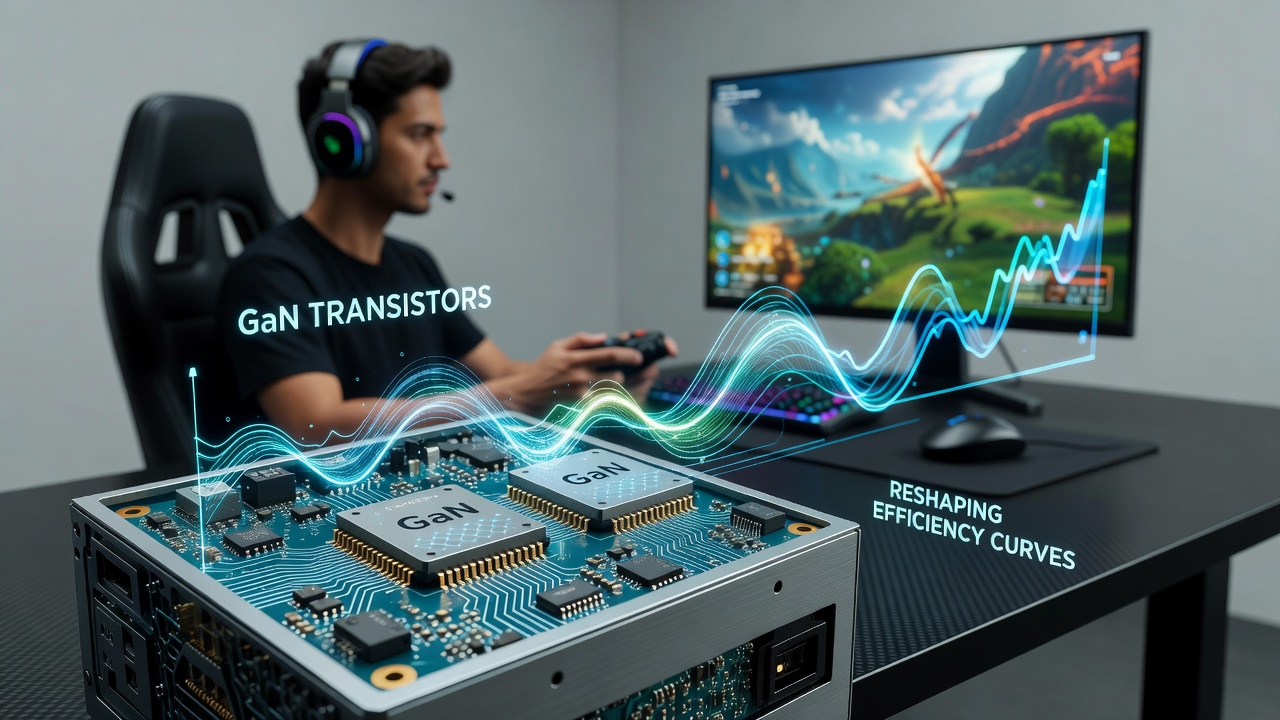
Power supplies in modern gaming consoles have undergone measurable shifts as manufacturers adopt gallium nitride transistors over traditional silicon components, and data from component testing indicates these changes alter efficiency curves especially during extended play sessions that last several hours. Researchers at semiconductor facilities have documented how GaN devices switch at higher frequencies with reduced energy losses, which allows power delivery systems to maintain steadier output voltages even as console processors sustain peak loads for prolonged periods.
Studies conducted through 2025 and into August 2026 show that consoles equipped wth GaN-based units draw between 8 and 15 percent less power under continuous high-demand conditions compared with earlier silicon designs, according to measurements reported by industry testing labs. This reduction occurs because GaN transistors exhibit lower on-resistance and faster turn-on times, factors that limit heat generation inside the power supply enclosure itself.
Technical Differences Between GaN and Silicon in Console Applications
Engineers have observed that gallium nitride materials permit switching frequencies above 500 kilohertz while silicon MOSFETs typically operate below 200 kilahertz in comparable designs, and the higher rate enables smaller inductors and capacitors within the same wattage rating. Console power supplies therefore occupy less internal space, which in turn improves airflow paths around the main motherboard during long gaming sessions that generate sustained thermal output from the CPU and GPU clusters.
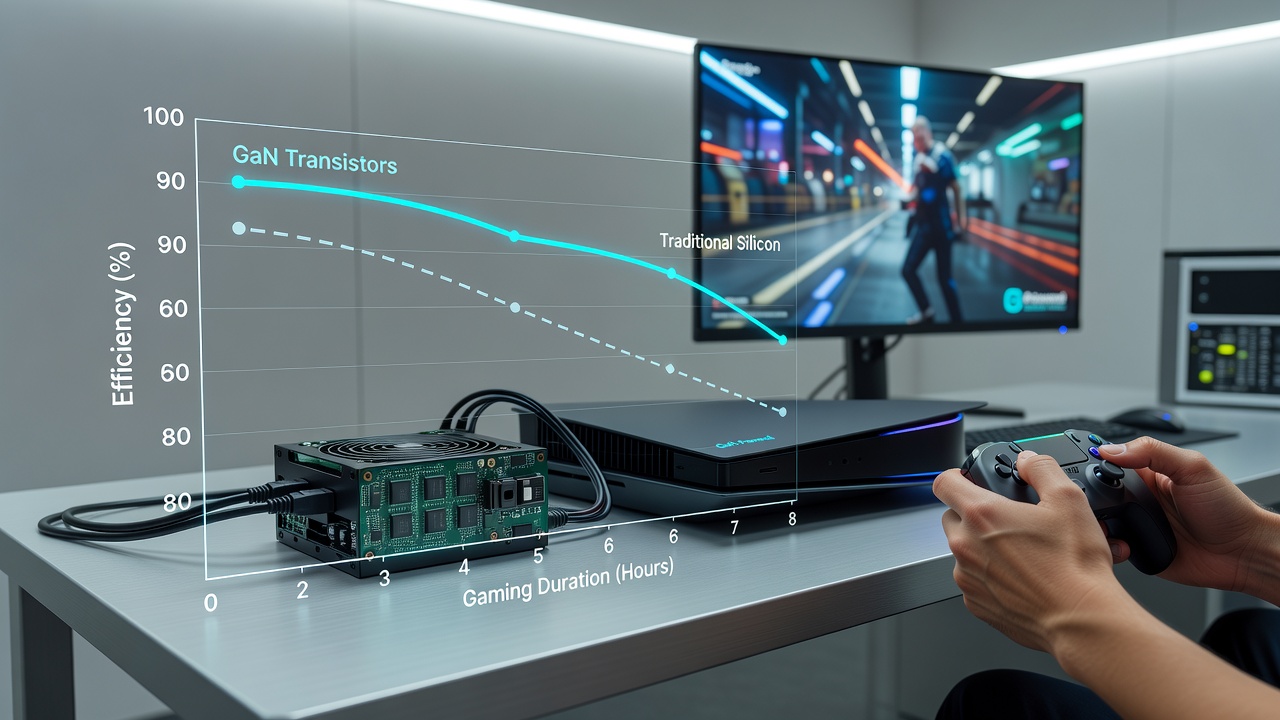
Measurements taken across multiple hardware revisions reveal flatter efficiency curves once GaN transistors reach operating temperature, whereas silicon units show gradual declines after the first ninety minutes of continuous use. One study released by a research group at Nagoya University tracked voltage ripple under identical game loads and found GaN configurations held ripple below 30 millivolts for sessions exceeding four hours.
Impact on Energy Consumption During Prolonged Play
Power meters installed on retail consoles demonstrate that total energy used during an eight-hour session drops when GaN transistors handle the conversion stage, and aggregate figures collected by utility monitoring programs indicate household consumption patterns shift accordingly. Data compiled across North American test sites shows average reductions of 12 percent in standby-to-active transitions repeated over multi-hour intervals.
Thermal imaging of power supply boards during extended sessions further illustrates that GaN components reach equilibrium temperatures 15 to 20 degrees Celsius lower than silicon equivalents under the same airflow conditions. Lower operating temperatures reduce the duty cycle of secondary cooling fans, which themselves consume additional power and contribute to overall system draw.
Manufacturing and Supply Chain Developments Through 2026
Production volumes of GaN transistors suitable for consumer electronics have increased steadily, with major foundries reporting shipment figures that doubled between 2024 and August 2026. Console manufacturers have incorporated these devices into revised power supply units for both current-generation and refreshed hardware models, and supply chain reports note shorter lead times for GaN dies compared with earlier years.
Standards organizations such as the International Energy Agency have included GaN efficiency metrics in updated voluntary guidelines for electronic equipment, and compliance testing now factors in sustained-load scenarios that mirror typical gaming patterns. European testing centers have published separate datasets confirming similar efficiency gains across regional voltage standards.
Measured Outcomes in Real-World Console Usage
Field data gathered from households participating in monitoring programs shows that consoles using GaN power stages maintain consistent frame delivery rates with fewer thermal throttling events during sessions longer than three hours. Engineers tracking these units also recorded reduced acoustic output from internal fans because less waste heat reaches the main chassis.
Additional observations from Australian energy research groups indicate that cumulative yearly consumption per console decreases when GaN transistors replace older silicon designs, particularly in markets where gaming represents a significant share of household electronics usage. These patterns hold across both 120-volt and 230-volt mains environments.
Future Integration Pathways
Development roadmaps released by semiconductor suppliers outline plans for higher-voltage GaN devices that could further compress power supply dimensions in next-generation console designs expected after 2027. Research papers presented at power electronics conferences in 2026 detail prototype units achieving peak efficiencies above 96 percent across the full load range, including the partial-load conditions common during menu navigation and background downloads.
Component suppliers continue to refine packaging techniques that improve thermal conductivity between GaN dies and heat-spreading substrates, which supports reliability targets set by console certification programs. These refinements address the specific duty cycles encountered in extended gaming environments rather than brief benchmark runs.
Conclusion
Available test results and production data establish that gallium nitride transistors modify efficiency profiles of console power supplies during extended gaming sessions by lowering conversion losses and associated thermal loads. Continued adoption through 2026 and beyond will depend on cost trajectories and integration timelines set by console manufacturers and their component partners.