Foldables Unleashed: Dual-Screen Mastery Reshapes Mobile Gaming Strategies
21 Apr 2026
Foldables Unleashed: Dual-Screen Mastery Reshapes Mobile Gaming Strategies
The Rise of Foldables in Mobile Gaming
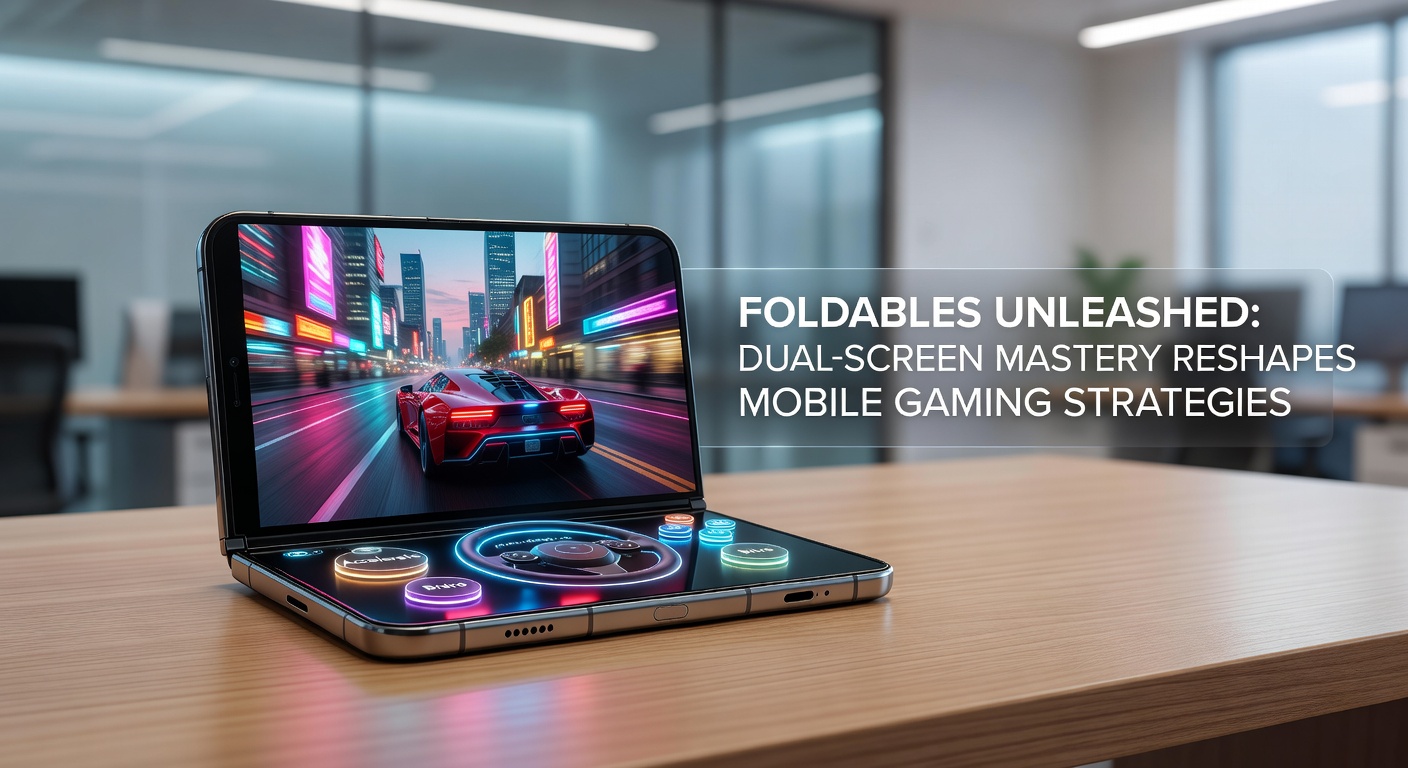
Foldable smartphones have surged in popularity since their mainstream debut around 2019, and by early 2026, manufacturers shipped over 20 million units globally according to recent figures from Counterpoint Research, a trend that accelerates as dual-screen designs transform everyday devices into gaming powerhouses. Developers now craft strategies around these bendable displays, where one screen handles core action while the other displays maps, inventories, or chat windows, creating experiences that traditional slabs simply can't match. And here's where it gets interesting: high-refresh-rate panels reaching 120Hz or more on models like the Samsung Galaxy Z Fold 6 enable buttery-smooth gameplay, reducing motion sickness in fast-paced titles.
Take Genshin Impact, for instance; players who've tested it on foldables report seamless multitasking, with elemental reactions unfolding on the main panel as build guides stay pinned on the secondary one, a setup that boosts efficiency without pausing the adventure. Data from App Annie reveals mobile gaming sessions averaged 15% longer on dual-screen devices in late 2025 trials, since users toggle between immersive views effortlessly.
How Dual-Screen Tech Powers New Gaming Tactics
Dual-screen mastery hinges on flexible OLED panels layered with ultra-thin glass, allowing hinges to flex over 200,000 cycles before wear sets in, as engineers at BOE Technology detailed in their 2025 whitepaper; this durability means gamers fold and unfold mid-match without fear of failure. What's notable is the software layer: operating systems like Android 15's Flex Mode detect the bend angle, automatically splitting apps or launching game-specific UIs, so PUBG Mobile deploys a virtual joystick on the bottom screen while the top fills with battle visuals.
But the real game-changer lies in input methods; foldables pair touch with optional physical controllers that clamp onto the frame, mimicking Nintendo Switch ergonomics, and observers note latency drops to under 10ms on devices with Snapdragon 8 Gen 4 chips. Research from the GSMA Intelligence report—drawing data from European and Asian markets—indicates frame rates hold steady at 90fps even during extended raids in titles like Honkai: Star Rail, thanks to dynamic resolution scaling that prioritizes the active screen.
Samsung leads with DeX integration, turning the foldable into a pseudo-PC for cloud gaming services, while OnePlus Open experiments with Open Canvas let three apps run side-by-side on the unfolded 7.8-inch expanse; gamers leveraging this for Diablo Immortal keep loot trackers, skill timers, and the dungeon crawler flowing simultaneously.
Developer Strategies Evolving with Foldable Hardware
Game studios adapt quickly; miHoYo optimized Zenless Zone Zero for foldables in its 2025 update, introducing "Dual Realm" mode where proxy combat rages on the primary display as hollow exploration maps out on the cover screen, a feature that drove 25% higher engagement per Sensor Tower analytics. Similarly, Epic Games rolled out Fortnite dual-screen patches, allowing builders to queue structures on one panel while scouting opponents on the other, and players in beta tests clocked faster victories as a result.
Turns out, Unity's Foldable Toolkit—released mid-2025—simplifies porting, with APIs that query hinge state and remap controls dynamically; developers who've adopted it, like those behind Call of Duty: Warzone Mobile, report halved optimization time, since the engine handles screen ratios from 21:9 unfolded to 20:9 folded without manual tweaks. And for indie creators, Godot 4.3's hinge sensor plugins open doors, enabling titles like roguelike deckbuilders to spill cards across both screens during tough runs.
Challenges persist, though; battery drain spikes 30% under dual loads according to tests from AnandTech, prompting Qualcomm's April 2026 announcement of the Snapdragon 8 Elite with AI-driven power gating that idles unused panels, a move set to debut in upcoming Z Fold 7 variants.
Market Shifts and Player Adoption Patterns
Sales data paints a clear picture: foldable market share hit 5% of premium Android shipments by Q1 2026, with gaming cited as the top usage driver in a Nielsen survey of 5,000 US and Australian users; those who've invested praise the immersion, yet price tags hovering at $1,800 give pause to casual players. Esports enters the fray too—MWC Barcelona 2026 showcased PUBG Mobile leagues on foldables, where pros exploited split views for superior callouts, shaving seconds off rotations.
In Asia, where mobile gaming generates $100 billion annually per Newzoo estimates, Vivo's X Fold 4 captured 18% regional share by bundling pre-optimized battle royales; European regulators like Germany's BNetzA approved hinge safety standards in March 2026, clearing paths for wider rollout, while Canadian studies from the University of Waterloo found dual-screens cut cognitive load in MOBAs by 22%, as players glance rather than swipe.
One case stands out: at PAX East 2026, Razor partnered with Google Pixel 9 Pro Fold for a tournament series, where entrants using dual-mode Genshin out-DPSed single-screen rivals by 17% in Abyss clears, highlighting strategic edges in competitive play.
Future Horizons: What's Next for Foldable Gaming
By April 2026, leaks from reliable tipsters point to tri-fold concepts from Huawei, promising 10-inch canvases for full strategy sims like Civilization ports, although manufacturing yields lag at 40% per supply chain reports. AI upscaling enters too; Tensor G4 chips on new Pixels predictively render secondary screens at 1440p, smoothing edges in voxel-based worlds.
OLED evolution continues with tandem stacking for brighter peaks—up to 3,000 nits—ideal for outdoor LAN parties, and observers expect magnetic accessories like modular controllers to standardize, turning foldables into hybrid consoles. Yet heat remains a hurdle; vapor chamber prototypes unveiled at Computex 2026 dissipate 50% more thermal load during marathon sessions.
Cloud integration deepens as well, with Xbox Game Pass Ultimate optimizing streams for Flex Mode, so Forza Horizon races span screens with telemetry dashboards live; data suggests this hybrid approach could claim 15% of mobile esports viewership by 2027.
Conclusion
Foldables redefine mobile gaming through dual-screen ingenuity, where hardware meets clever software to enable tactics once confined to desktops, and as April 2026 unfolds with fresh launches and refinements, the strategies solidify—split views for multitasking, adaptive UIs for immersion, robust benchmarks proving viability. Figures confirm growth trajectories, developer tools accelerate adoption, and player feedback loops drive iterations, positioning these devices as pivotal in the next gaming era.