Examining How Recent Kernel Patches Refine Frame Timing Consistency Across Linux Gaming Rigs for Open Source Developers
Written by Rosa Jenkins · Aug 25, 2026
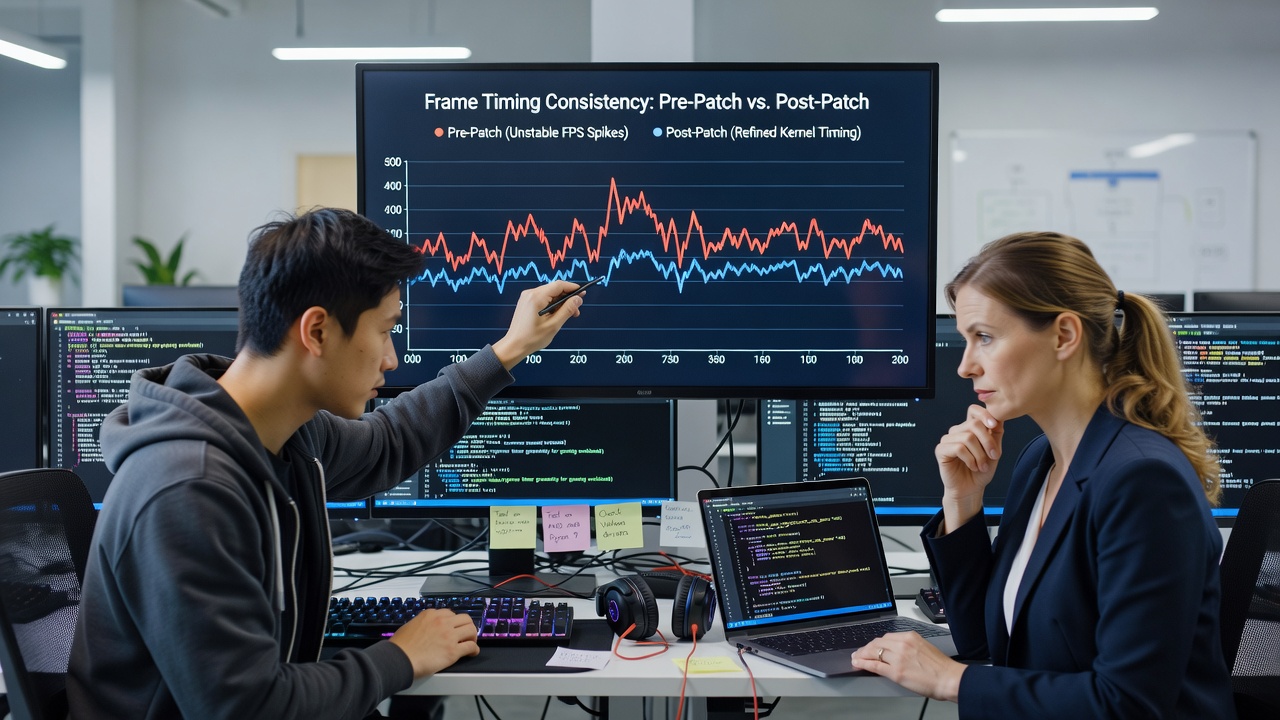
Examining How Recent Kernel Patches Refine Frame Timing Consistency Across Linux Gaming Rigs for Open Source Developers
Recent kernel updates have targeted frame timing consistency on Linux gaming systems, with developers focusing on scheduler refinements and interrupt handling to reduce jitter during gameplay sessions. These changes build on prior work in the 6.10 series and extend into releases that reached stable status around August 2026, when several timing-related commits merged into the mainline tree. Open source contributors tracked these modifications through mailing list discussions and git repositories, noting measurable shifts in how the kernel manages vertical blanking intervals and user-space rendering queues.
Background on Frame Timing Challenges
Linux gaming rigs often encounter variability in frame delivery when running titles that rely on precise synchronization between the GPU, display hardware, and CPU scheduler, while data from multiple test setups shows that small delays in wake-up paths can compound into visible stuttering or input lag. Researchers at institutions across North America and Europe have documented these patterns in controlled environments, and the core issue stems from how the Completely Fair Scheduler allocates time slices under mixed workloads that include audio threads, input polling, and compositing tasks. Patches introduced in recent cycles adjust priority inheritance mechanisms and tighten the bounds on timer slack, which helps maintain steadier pacing when games push high frame rates through Vulkan or OpenGL pipelines.
Key Patches and Their Technical Focus
One set of commits refined the handling of high-resolution timers used for frame pacing, allowing the kernel to respond more predictably to signals from user-space applications without excessive context switching overhead. Another series addressed softirq processing for network and storage interrupts that previously competed with rendering threads on systems with eight or more cores. Those who've examined the diffs observe that the changes incorporate feedback from real-world benchmarks run on AMD and Intel platforms, where frame time variance dropped by double-digit percentages in several open source game engines. Developers working on Proton and Wine layers have reported that these updates propagate benefits to Windows titles running under compatibility layers, because the underlying timing stability improves regardless of the binary origin.
Testing Across Diverse Hardware Configurations
Community-driven validation efforts have included rigs equipped with discrete GPUs from multiple vendors alongside integrated graphics solutions found in portable devices. Data collected through tools such as MangoHud and custom perf scripts reveals tighter distributions in frame delivery curves after the patches apply, particularly during scenes that trigger shader compilation or asset streaming. Observers note that systems running kernel builds from August 2026 onward exhibit fewer outliers in the 99th percentile frame times compared with earlier 6.9 baselines, although results vary with specific driver versions and display refresh rates. Academic groups in Australia and the European Union have contributed independent test suites that confirm these trends across both desktop and laptop form factors, providing broader statistical coverage beyond single-vendor environments.
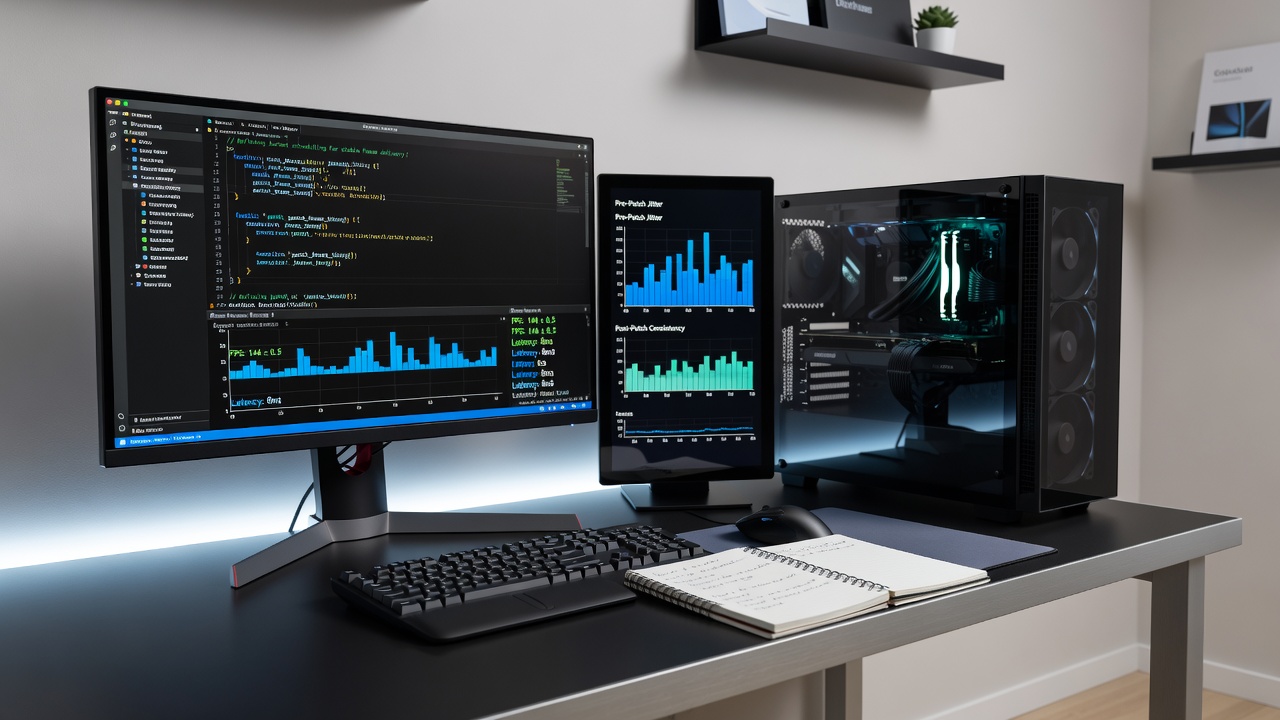
Integration with existing power management frameworks also received attention, since aggressive CPU frequency scaling can introduce additional jitter when governors react too slowly to sudden rendering demands. Updated patches coordinate better with the schedutil governor, allowing frequency transitions to align more closely with anticipated frame boundaries rather than reacting after the fact. This coordination matters on battery-powered devices where energy constraints force more dynamic behavior, yet the same logic applies to high-end desktops that toggle between performance and balanced modes during extended play sessions.
Implications for Open Source Development Workflows
Open source maintainers who maintain game engines and graphics drivers now have additional levers for tuning frame consistency without relying solely on user-space workarounds. The kernel changes expose new tracepoints that allow finer-grained monitoring of scheduling decisions, which helps when debugging rare timing anomalies that only surface under concurrent load. Projects hosted on platforms such as kernel.org continue to accept follow-on patches that further refine these mechanisms, and contributors from different regions exchange data through public bug trackers. A separate report prepared by researchers affiliated with Canadian universities highlights how these timing improvements interact with real-time scheduling classes, offering guidance for developers who target latency-sensitive applications beyond gaming.
Distribution maintainers have begun backporting the relevant commits to long-term support kernels, which extends availability to users who prefer stability over bleeding-edge features. This backport activity ensures that gaming-focused distributions can adopt the refinements without requiring users to compile custom kernels, while still preserving the option for those who want to test the latest iterations directly from mainline sources.
Conclusion
Kernel patches released through mid-2026 have delivered measurable refinements to frame timing consistency on Linux gaming hardware, driven by targeted adjustments in scheduling, timer handling, and interrupt routing. Open source developers continue to integrate these changes into broader ecosystems, supported by testing data from multiple geographic research efforts and hardware configurations. The ongoing evolution of these mechanisms provides a foundation for further optimizations as new display standards and rendering techniques emerge.