11 Jul 2026
Drive Calibration Methods Minimizing Asset Pop-In During Expansive Adventure Title Transitions
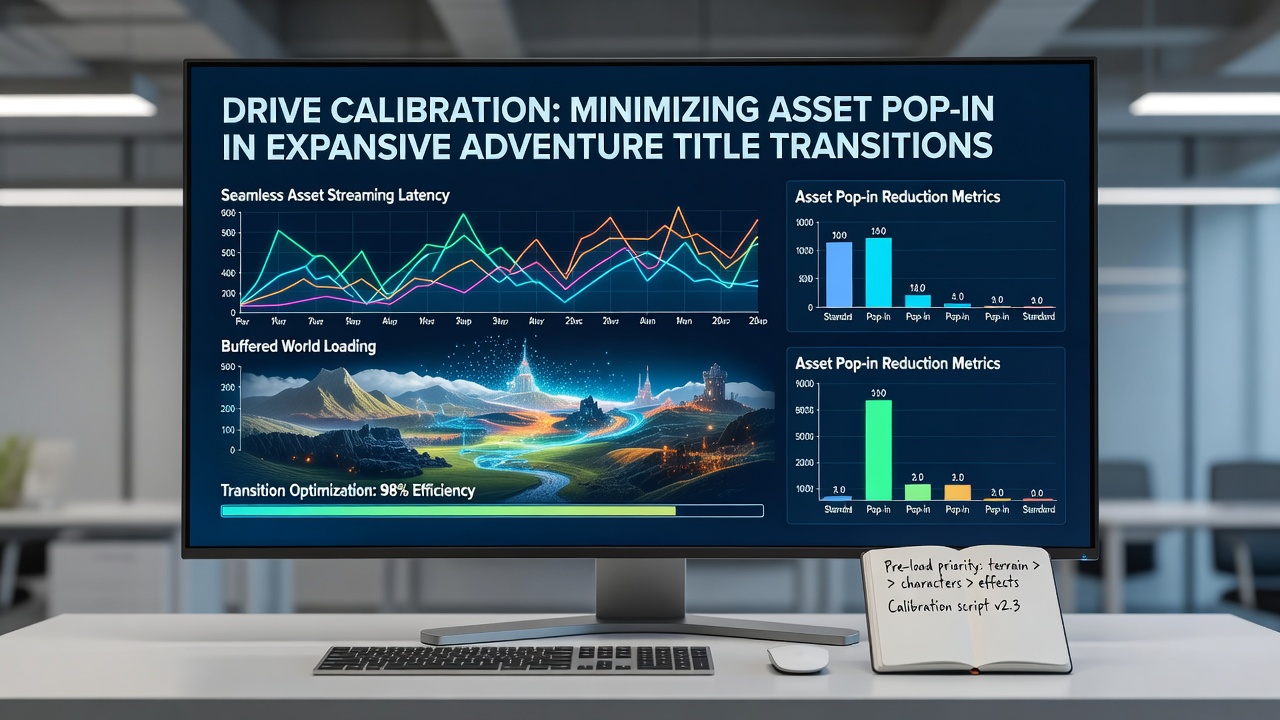
Expansive adventure titles rely on seamless world transitions where players move between vast regions without noticeable delays or visual artifacts, and drive calibration plays a central role in managing asset delivery from storage devices to memory. Asset pop-in occurs when models, textures, or environmental elements load after a player has already entered a new area, breaking immersion in games that feature continuous exploration across large maps. Calibration methods adjust drive parameters such as read speeds, prefetch buffers, and sector alignment to optimize data flow during these critical shifts.
Core Principles of Drive Calibration in Gaming Contexts
Storage devices handle asset streaming through sequential and random read operations, yet adventure titles demand predictive access patterns that anticipate player movement across zone boundaries. Calibration begins with mapping drive latency profiles under various load conditions, which allows developers to set buffer sizes that preload data for upcoming regions before transitions complete. Data from hardware benchmarks shows that calibrated drives reduce average load times by aligning block sizes with typical asset chunk distributions found in open-world environments.
Researchers at institutions across multiple regions have examined how firmware adjustments influence streaming performance. One study conducted through a Canadian research consortium highlighted the benefits of dynamic queue depth tuning, where the drive controller adapts request priorities based on real-time gameplay telemetry. This approach ensures that high-priority assets like character models and collision data arrive first during area handoffs, while background elements follow in optimized sequences.
Prefetch Algorithms and Predictive Calibration Techniques
Predictive calibration integrates game engine data with drive firmware to forecast asset needs based on player velocity and directional inputs. Systems monitor traversal speed and elevation changes to trigger early reads from distant sectors, minimizing the gap between zone entry and full asset resolution. Engineers calibrate these triggers by running repeated test loops through transition corridors, adjusting timing offsets until pop-in events drop below measurable thresholds in controlled environments.
Additional methods involve sector remapping to group related assets into contiguous blocks on the physical medium, which cuts seek times during rapid area switches. Calibration software analyzes asset dependency graphs from the game build and rearranges data placement accordingly, creating efficient pathways for sequential loading. Observers note that this physical reorganization complements software-side streaming budgets, allowing titles to maintain higher visual fidelity without exceeding memory constraints.
Integration with Modern Storage Standards as of July 2026
By July 2026, drive manufacturers have incorporated calibration profiles tailored specifically for gaming workloads into consumer SSD firmware updates. These profiles prioritize low-latency modes during detected gameplay sessions, automatically adjusting power states and cache behaviors to support continuous asset streams. Industry reports from European trade associations indicate that certified calibration tools now include adventure title templates, which developers apply during final optimization passes before release.
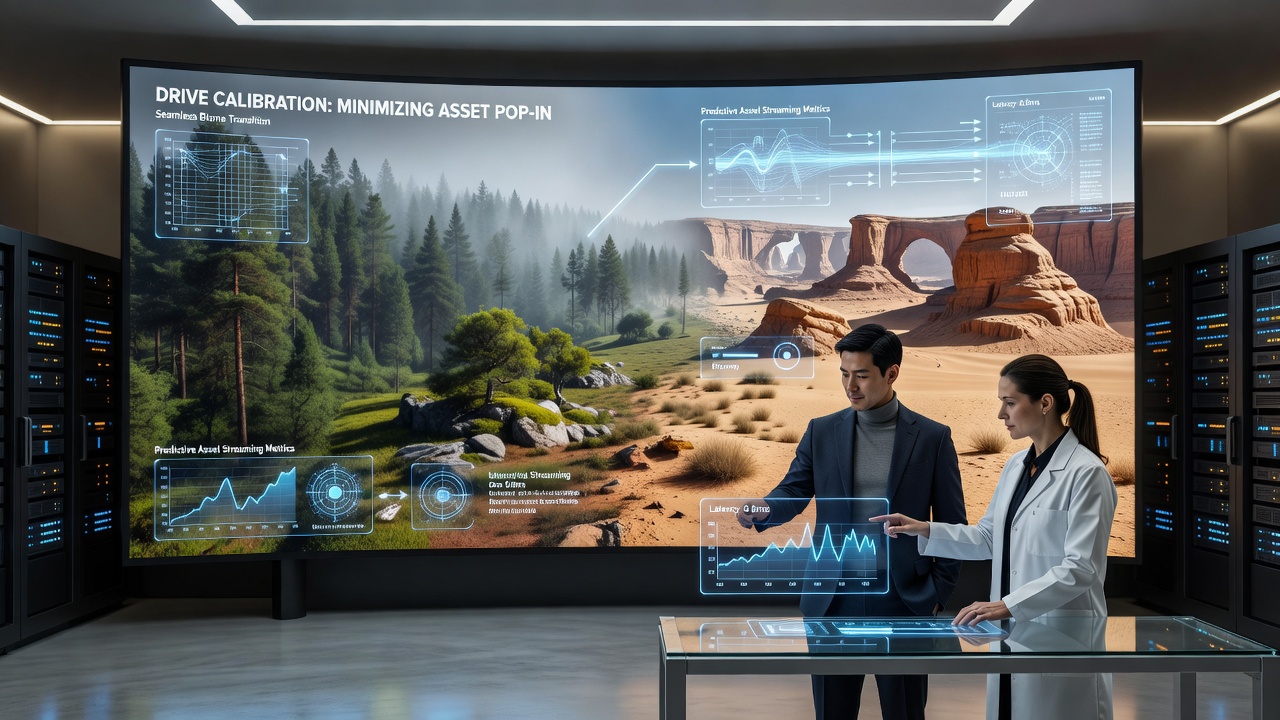
Calibration extends beyond hardware tweaks to encompass runtime monitoring systems that log pop-in incidents and feed data back into iterative refinement cycles. Teams compare metrics across multiple drive models to establish baseline expectations, then fine-tune parameters like over-provisioning ratios and error correction aggressiveness. Such data-driven loops have become standard practice for studios handling titles with expansive world designs that feature frequent biome or region changes.
Case Examples from Development Pipelines
One development team working on a large-scale exploration project applied calibration routines to their level transition system, resulting in measured improvements to asset visibility timing across tested hardware configurations. The process involved creating custom scripts that simulated player paths through transition zones while recording drive response curves, then using those curves to set permanent firmware offsets. Similar techniques appear in titles released after 2024, where calibration data accompanies patches that address streaming inconsistencies reported by players on varied storage setups.
Academic sources, including work from Australian university labs focused on interactive media, have contributed models for estimating pop-in probability based on drive calibration states. These models factor in variables such as fragmentation levels and thermal throttling patterns, providing developers with quantitative targets during the calibration phase. Integration of these models into build tools allows for automated checks that flag potential transition issues before they reach quality assurance testing.
Conclusion
Drive calibration methods continue to evolve alongside storage technology and game design demands, offering concrete pathways to reduce asset pop-in in expansive adventure titles. Through systematic profiling, predictive algorithms, and ongoing integration with updated firmware standards, these techniques support smoother transitions that align with player expectations for fluid exploration. Data indicates sustained interest from both hardware vendors and development studios in refining these approaches for future releases.