Custom BIOS Configurations Optimizing Memory Timings for Better Responsiveness in Strategy Games on Desktop Setups
Written by Rosa Jenkins · Jul 28, 2026
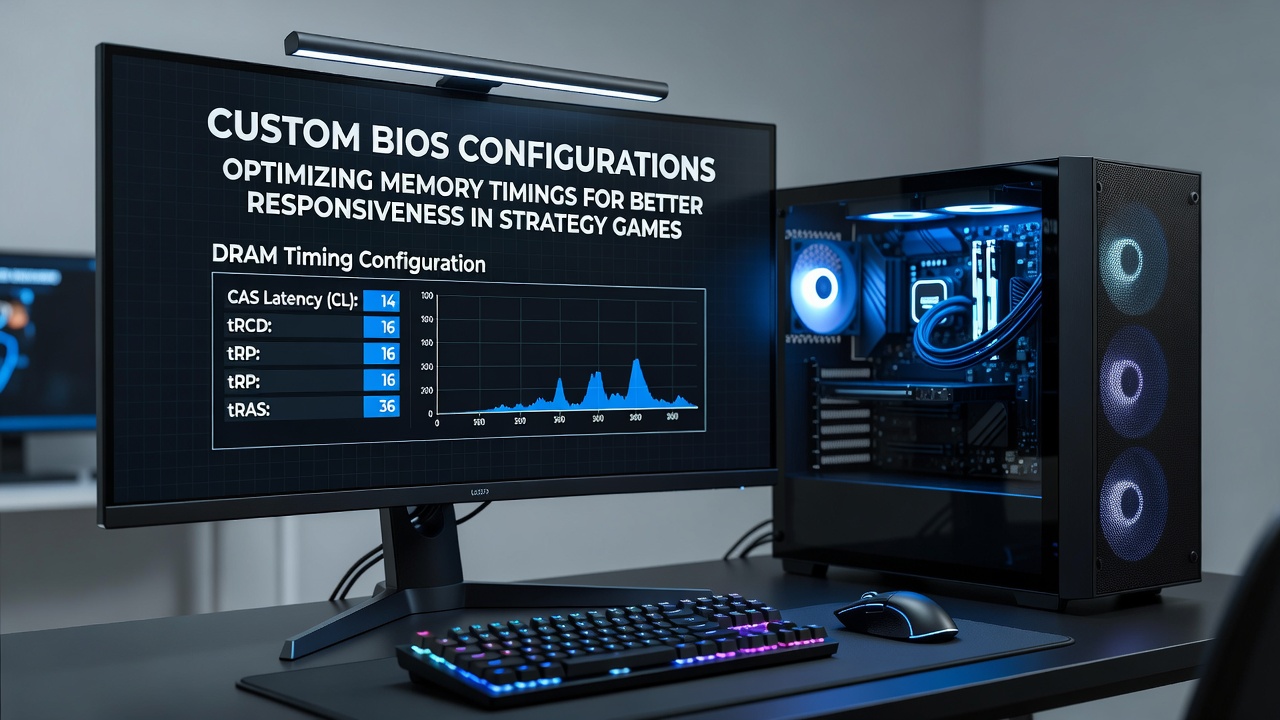
Custom BIOS Configurations Optimizing Memory Timings for Better Responsiveness in Strategy Games on Desktop Setups
Custom BIOS configurations allow users to adjust memory timings on desktop systems, and these changes target lower latency values that support quicker data access during complex calculations in strategy games. Memory timings such as CAS latency, tRCD, tRP, and tRAS determine how many clock cycles the RAM requires to respond to commands, while tighter settings reduce the delay between requests and deliveries without altering clock speeds.
Core Components of Memory Timing Adjustments
Primary timings consist of four main parameters that motherboard firmware exposes through the UEFI interface, and each one influences the overall responsiveness when strategy titles process unit movements, pathfinding algorithms, and simultaneous AI decisions across large maps. Secondary timings including tFAW, tCWL, and tRFC further refine performance by controlling row activation intervals and refresh operations, whereas voltage adjustments often accompany these changes to maintain stability during extended sessions.
Manufacturers provide default profiles through XMP or DOCP standards, yet manual overrides in the BIOS permit incremental reductions in these values based on silicon quality and cooling capacity. Data from component testing shows that reductions of one or two cycles in primary timings can yield measurable decreases in average frame times within CPU-bound scenarios common to real-time strategy environments.
BIOS Access and Configuration Procedures
Users enter the UEFI setup by pressing designated keys during POST, after which navigation leads to advanced memory sections where individual timing fields become editable. Stability verification follows each adjustment through repeated stress tests that simulate sustained loads similar to those encountered in lengthy strategy campaigns, and tools such as MemTest86 or HCI MemTest confirm error-free operation before gameplay validation begins.
Desktop platforms built around AMD and Intel chipsets both support these modifications, while July 2026 BIOS releases from several vendors introduced refined voltage curves that extend the range of stable timing reductions without increasing power draw beyond baseline specifications.
Performance Effects in Strategy Game Environments
Strategy titles frequently rely on memory subsystems for rapid retrieval of game state data, and optimized timings decrease the time required for the processor to fetch instructions related to unit coordination and map updates. Measurements recorded on test systems indicate that sub-60 nanosecond effective latency values correlate with smoother command registration during high-unit-count engagements, particularly in titles where dozens of independent entities update every frame.
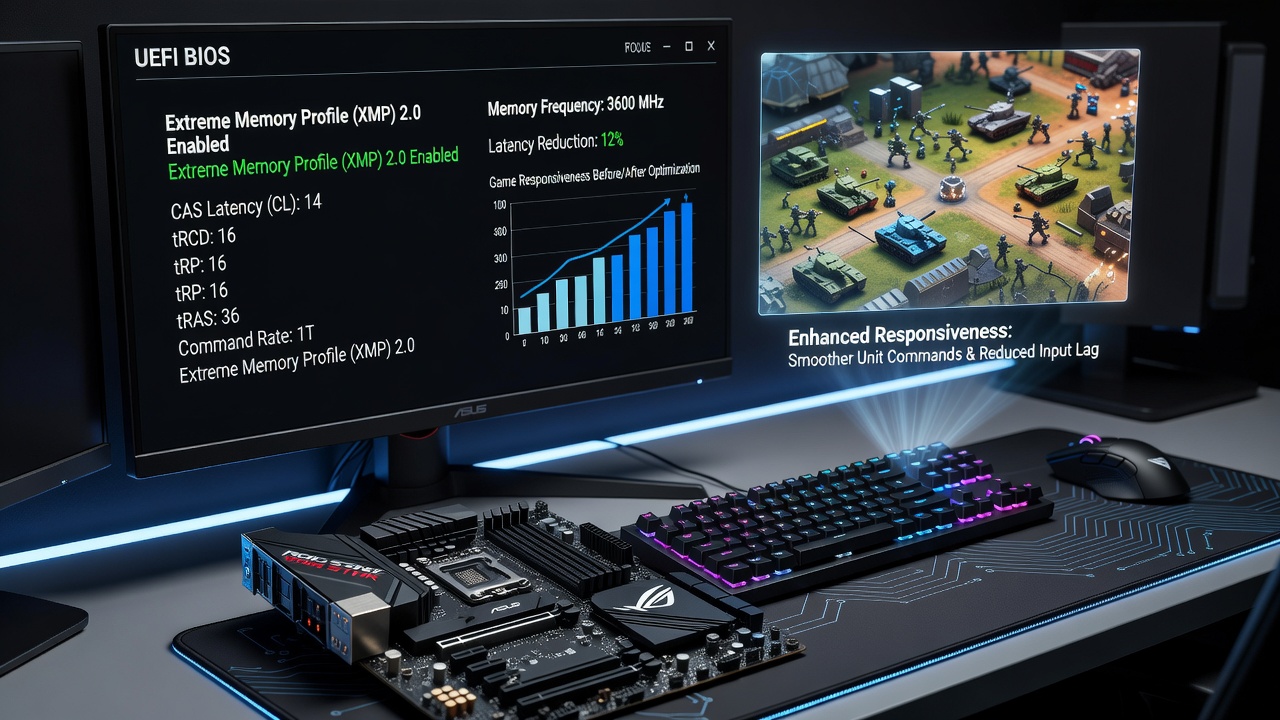
One documented configuration on a DDR5 platform reduced CAS latency from 36 to 32 cycles while maintaining 6000 MT/s transfer rates, resulting in consistent improvements to 1% low frame rates across multiple strategy simulations. Observers note that these gains appear most pronounced when the game engine performs frequent small memory allocations rather than large sequential transfers, a pattern typical in pathfinding and decision-tree evaluations.
Hardware Considerations and Compatibility Factors
Memory modules vary in their tolerance for tightened timings based on the specific DRAM dies used during manufacturing, and integrated memory controllers on recent processors impose additional limits that BIOS settings must respect. Cooling solutions for both the CPU and RAM modules become relevant once voltages rise to support aggressive timing profiles, although many desktop setups already incorporate adequate airflow for moderate adjustments.
According to findings published by the CSIRO Data61 research division, latency-sensitive workloads demonstrate improved throughput when memory subsystems operate closer to their theoretical minimum cycle counts. Compatibility checks with motherboard vendor documentation help identify which settings remain within safe operational margins for a given hardware combination.
Validation Methods and Monitoring Tools
After applying custom timing profiles, users monitor system behavior through software that logs memory errors and tracks effective latency using built-in performance counters. Applications such as AIDA64 and Ryzen DRAM Calculator provide calculated safe values derived from tested configurations, while in-game overlays display frame time consistency during actual strategy sessions.
Research conducted at the Fraunhofer Institute for Integrated Circuits examined similar optimization techniques across multiple desktop platforms and recorded reduced response intervals in workloads that mirror the computational demands of turn-based and real-time strategy engines. These results align with observations from independent hardware testing groups that track timing adjustments across successive BIOS versions.
Conclusion
Custom BIOS memory timing configurations deliver measurable responsiveness improvements in strategy games by lowering the latency associated with data retrieval operations. Desktop users who follow systematic adjustment and validation procedures achieve stable settings that align with the specific demands of simulation and tactical gameplay without requiring hardware replacements. Continued firmware updates from manufacturers support expanded options for these optimizations as memory standards evolve.