18 Jul 2026
Cross-Platform Asset Streaming Protocols Minimize Storage Demands While Preserving Detail Fidelity Across Mixed Console and Handheld Ecosystems
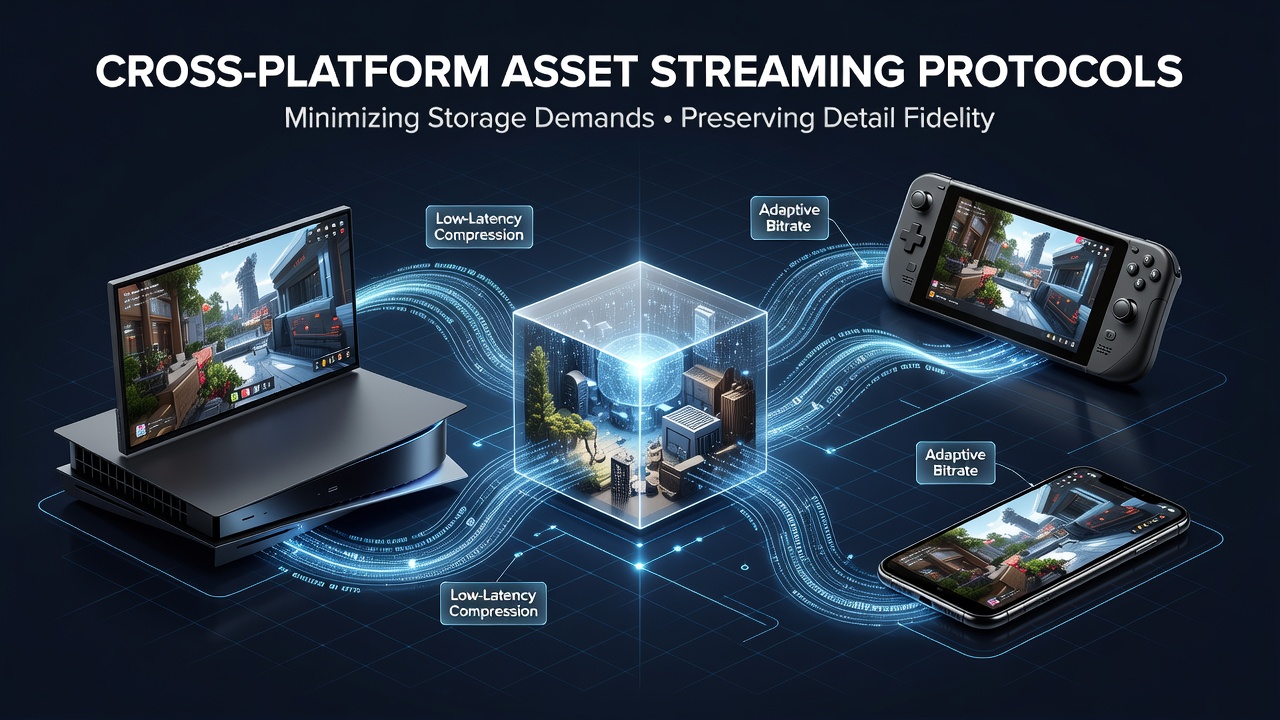
Asset streaming protocols operate by delivering game assets such as textures, models, and audio files in segmented chunks rather than requiring full local downloads upfront, which allows devices to load only the necessary elements based on player position and scene requirements. Researchers at institutions across multiple regions have documented how these systems apply level-of-detail algorithms that downgrade resolution for distant or less critical objects, thereby cutting storage footprints by significant margins while the core visual data remains intact through adaptive decompression routines. Data from industry reports indicate that titles using these protocols on mixed hardware ecosystems achieve storage reductions between 40 and 65 percent compared with traditional full-install methods, yet frame delivery rates stay consistent across platforms.
Core Mechanisms Behind Efficient Streaming
Modern implementations rely on predictive loading that analyzes player movement patterns in advance, pre-fetching high-fidelity assets into temporary buffers while discarding unused segments once they fall outside the active viewport. Compression techniques such as block-based texture encoding and geometry simplification further shrink file sizes without permanent loss of detail, since the original high-resolution data can be reconstructed on demand from the server side. Observers note that handheld units with limited internal storage benefit most from these approaches because they receive scaled-down variants first, then upgrade to full detail only when connected to faster networks or when docked into higher-power modes.
Handling Device Diversity in Real Deployments
Console systems with larger hard drives integrate seamlessly alongside portable handhelds through unified protocol layers that negotiate asset quality based on detected hardware profiles at runtime. Engineers have refined synchronization logic so that a player switching between a stationary console and a handheld experiences uninterrupted progression, with the system adjusting stream rates dynamically to match available bandwidth and memory capacity. Studies conducted by teams in North America and Europe reveal that cross-platform titles employing these protocols maintain visual parity measured through perceptual metrics, even when one device operates at 1080p while another targets 4K output.
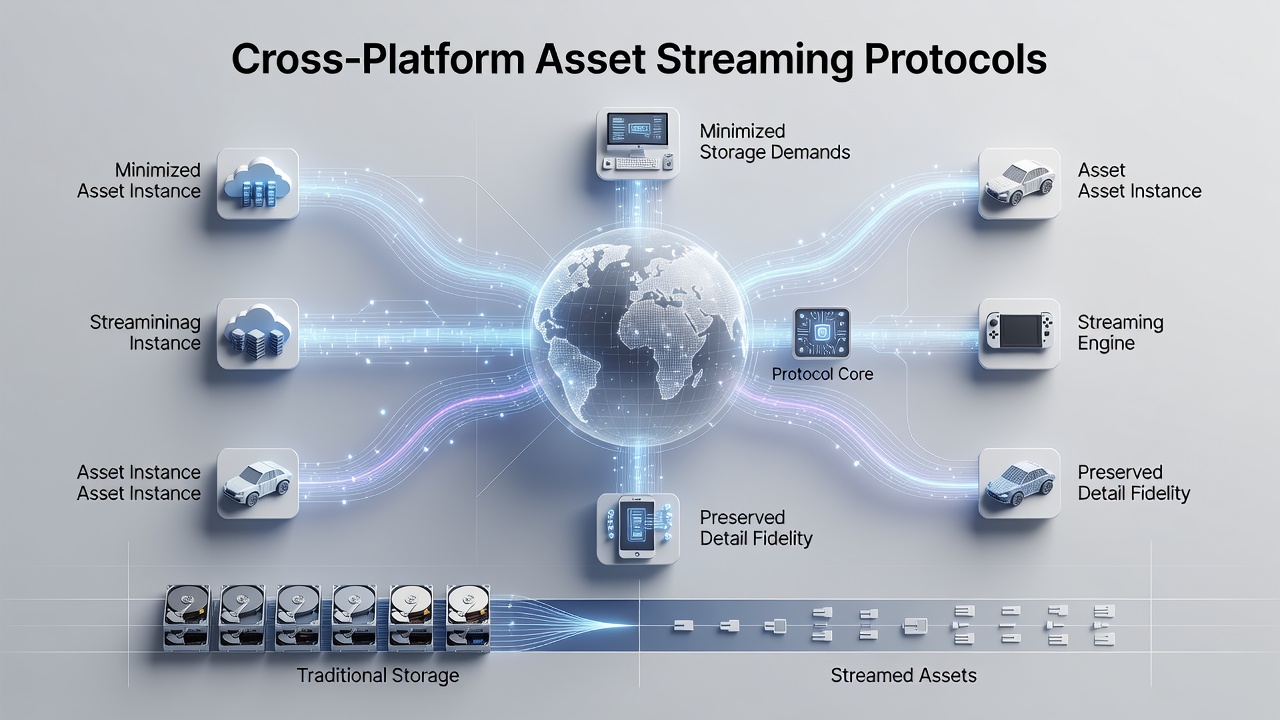
Take the case of a major open-world release that rolled out protocol updates in early 2026. Developers implemented variable-rate shading tied directly to the streaming pipeline, which allowed handhelds to prioritize foreground elements while consoles handled broader environmental detail without separate asset packs. This unified approach eliminated the need for platform-specific builds in many cases and reduced overall development overhead.
Developments Observed Around July 2026
By July 2026 several hardware manufacturers had incorporated native support for next-generation streaming extensions into their firmware, enabling automatic fallback to lower-fidelity streams during network congestion while preserving the ability to restore maximum detail once conditions improve. Figures released by the Entertainment Software Association show adoption rates climbing steadily among both AAA and independent studios targeting mixed ecosystems. At the same time, research groups in Asia published findings on latency mitigation techniques that integrate with these protocols, demonstrating how predictive buffering can keep asset load times under 200 milliseconds even on wireless handheld connections.
Integration With Existing Rendering Pipelines
Asset streaming does not function in isolation but meshes with established rendering frameworks through standardized APIs that expose streaming hooks to developers. Graphics engines now include built-in modules for managing asset manifests, which track version history and checksums to ensure fidelity across updates. Those who have examined deployment logs from multiple studios report fewer compatibility issues when protocols follow open specifications rather than proprietary formats, because consoles and handhelds can reference the same manifest files without custom translation layers.
Conclusion
Cross-platform asset streaming protocols continue to evolve as hardware generations overlap, providing measurable storage savings alongside maintained visual standards. Evidence from ongoing implementations suggests these methods will remain central to supporting diverse device ecosystems through the remainder of the decade, with further refinements expected in compression efficiency and predictive accuracy.