Component Interactions That Determine Thermal Thresholds in Multi-GPU Configurations for Rendering-Intensive Applications
Written by Blake Bauer · Aug 25, 2026
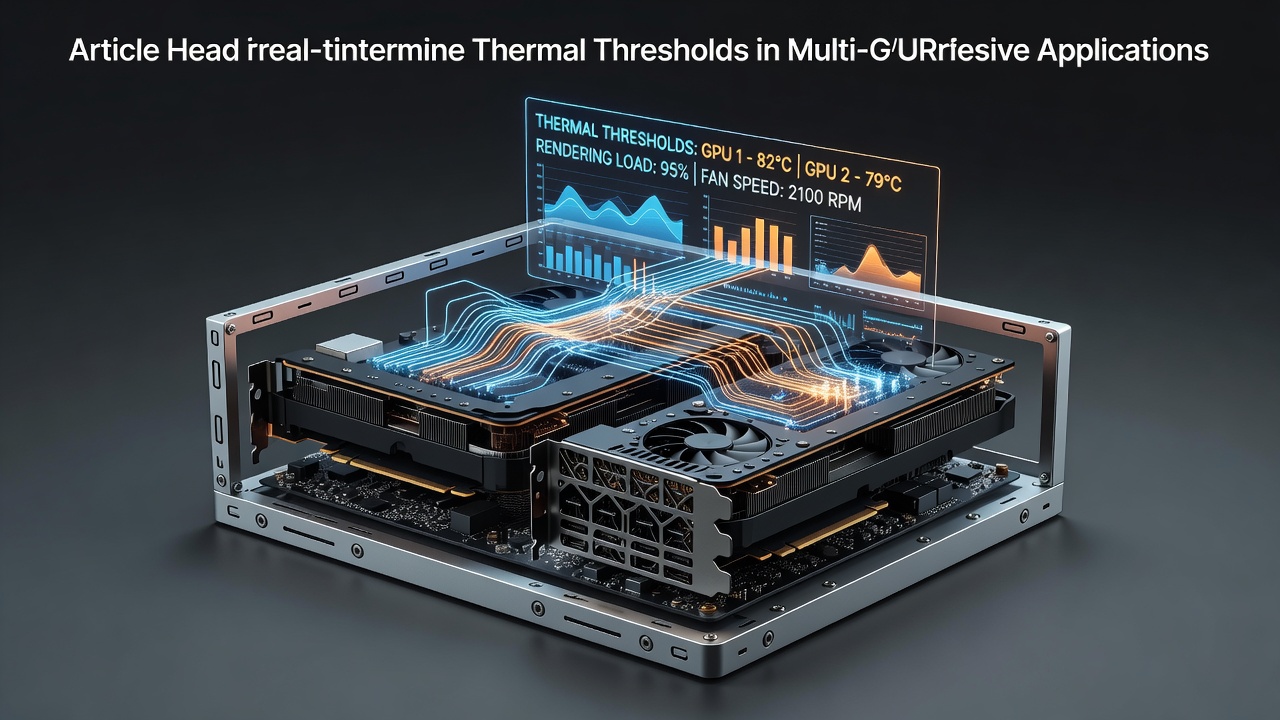
Component Interactions That Determine Thermal Thresholds in Multi-GPU Configurations for Rendering-Intensive Applications
Multi-GPU configurations used in rendering-intensive applications such as 3D animation, scientific visualization, and real-time ray tracing rely on precise thermal threshold management because each graphics processor generates substantial heat that interacts with adjacent components through conduction, convection, and shared power rails. These interactions set the practical limits for sustained performance because exceeding a GPU's thermal threshold triggers throttling that reduces clock speeds and extends render times across the entire array. Observers note that the placement of GPUs on the motherboard, the spacing between cards, and the design of the power delivery network all contribute to how heat migrates from one device to another.
Heat Transfer Mechanisms Between Adjacent GPUs
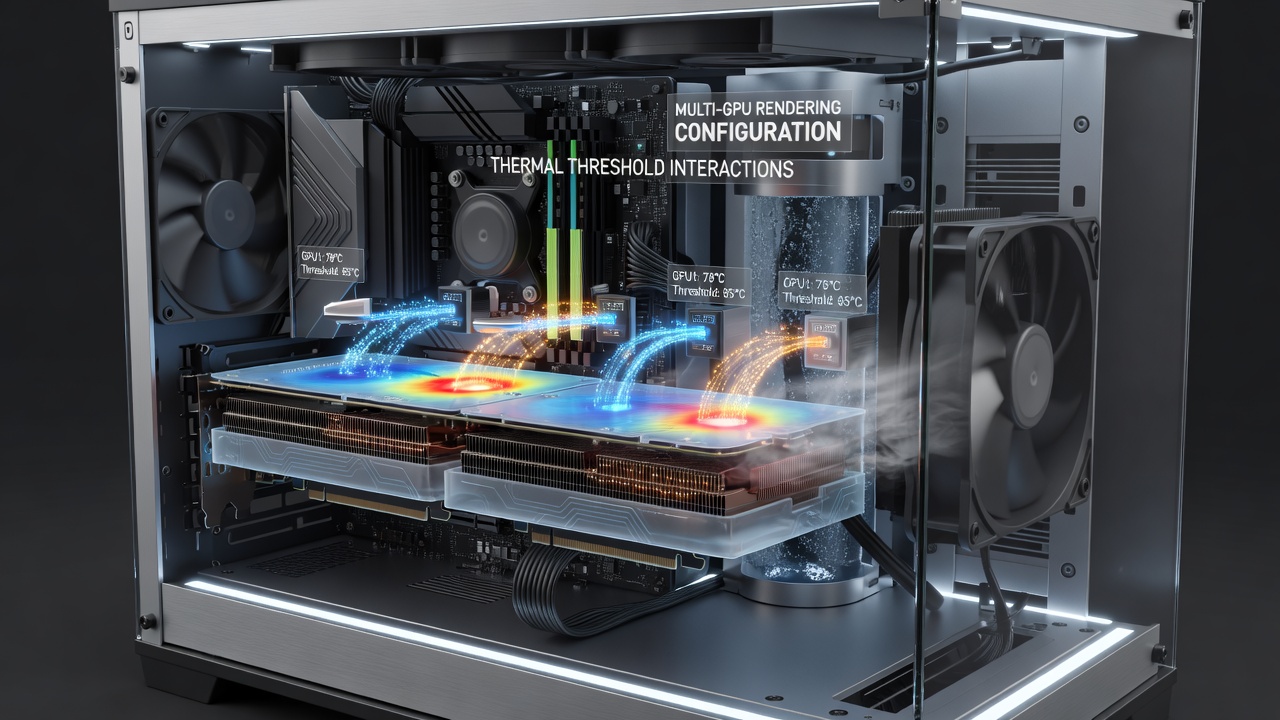
Direct heat transfer occurs when exhaust from one GPU's cooler warms the intake air of its neighbor, raising inlet temperatures by several degrees and shifting the entire thermal balance of the system. Researchers at ETH Zurich documented this effect in dense four-GPU racks where a 10 mm gap between cards produced measurable temperature gradients that propagated through the chassis. Power delivery components on the motherboard also participate because high-current VRMs located near PCIe slots dissipate additional heat that combines with GPU exhaust and further elevates local ambient conditions.
Thermal interface materials between dies and cold plates play a decisive role in how efficiently each GPU sheds heat before that heat reaches neighboring devices. When these materials degrade or when mounting pressure varies across cards, localized hotspots develop that force earlier throttling in one GPU while others remain underutilized. Rendering workloads that distribute tasks unevenly across GPUs can therefore create asymmetric thermal loads that accelerate wear on the hottest unit.
Power Delivery and Voltage Interactions
Shared power supply units and motherboard VRM phases experience increased current draw when multiple GPUs render simultaneously, and this elevated load generates its own heat that feeds back into the thermal environment. Data from industry testing shows that a 1600 W PSU operating at 80 percent capacity under sustained multi-GPU loads can add several degrees to nearby component temperatures through I2R losses in cables and connectors. Voltage regulation modules positioned between GPU slots therefore become secondary heat sources whose contribution grows with each additional card installed.
August 2026 firmware updates from major GPU vendors introduced more granular power gating that reduces idle power on secondary cards during partial workloads, yet these changes still require adequate cooling capacity because transient spikes during frame buffer synchronization continue to stress the shared power infrastructure. Observers note that systems using PCIe 5.0 risers can experience additional thermal overhead from the higher signaling rates, although the effect remains secondary to GPU die heat.
Airflow Dynamics and Case-Level Interactions
Chassis fan curves and ducting arrangements determine whether hot exhaust from the top GPU recirculates into lower intakes or exits cleanly through rear or top vents. Studies conducted by the University of Toronto's thermal engineering group revealed that front-to-rear airflow optimized for single-GPU systems often fails in four-GPU configurations because the middle cards receive preheated air that has already passed over the first and second units. Positive pressure designs with filtered intakes help reduce dust accumulation on heatsinks, yet they can also trap heat if exhaust paths become restricted by cable bundles or drive cages.
Water-cooling loops that connect multiple GPUs in series introduce another layer of interaction because coolant temperature rises progressively along the loop, delivering warmer fluid to downstream blocks. Parallel loop designs mitigate this gradient but require larger radiators and higher pump flow rates to maintain consistent temperatures across all cards. Both approaches ultimately depend on radiator surface area and ambient room temperature to keep the entire array below throttling thresholds during extended render jobs.
Workload Distribution and Software Factors
Rendering applications that assign unequal tile or frame loads to individual GPUs create localized thermal spikes that can trigger protective limits on one card while others operate well below capacity. Load-balancing algorithms that monitor per-GPU temperatures and redistribute work accordingly have become standard in professional software suites because they extend the time before any single device reaches its threshold. Memory bandwidth contention and NVLink or Infinity Fabric traffic also generate secondary heat within the GPU packages themselves, adding to the total thermal budget that cooling systems must handle.
Conclusion
Thermal thresholds in multi-GPU rendering setups emerge from the combined effects of direct heat transfer, power delivery losses, airflow patterns, and workload distribution rather than from any single component in isolation. Effective configurations address these interactions through careful spacing, balanced power delivery, optimized cooling loops, and software that accounts for temperature feedback across the array. Continued refinement of these component relationships remains essential as rendering applications demand ever-higher sustained performance from dense GPU clusters.