19 May 2026
5G Expansions Reshaping Latency Barriers in Worldwide Mobile Esports Tournaments
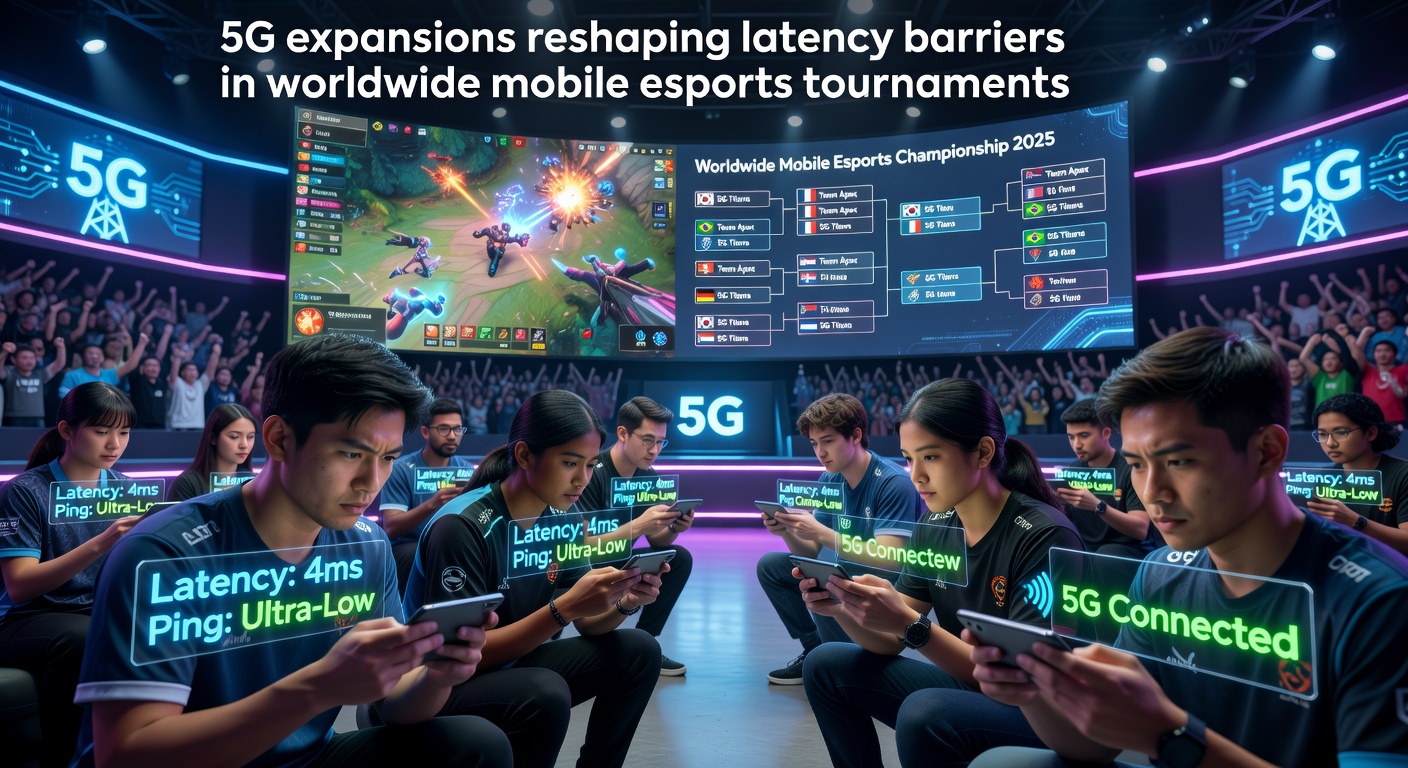
5G network rollouts continue to alter the parameters of competitive mobile gaming by slashing end-to-end latency from the 30-to-50 millisecond range typical of prior generations down to single-digit figures in many urban deployments, and this shift enables synchronized tournaments that span multiple continents without the desync issues that once plagued real-time strategy and battle arena titles. Researchers at several technical institutes note that the combination of edge computing nodes placed near cell towers and the ultra-reliable low-latency communications slice within 5G standards produces consistent sub-10 ms round-trip times during live matches, which in turn allows organizers to schedule simultaneous brackets across time zones while maintaining frame-level fairness.
Network Infrastructure Changes Driving Tournament Viability
Operators in East Asia, Europe, and North America have activated additional mid-band spectrum blocks throughout 2025 and into 2026, resulting in denser small-cell grids that support the packet prioritization required for esports traffic. Data collected by the GSMA shows that average mobile latency in major host cities dropped below 8 ms during peak evening hours by early 2026, a threshold that aligns with the input windows demanded by professional players using touch or external controllers. Tournament platforms now route match instances through localized 5G cores rather than centralized cloud servers, cutting the physical distance data must travel and thereby reducing jitter that previously forced organizers to insert artificial buffers.
These infrastructure adjustments also intersect with device-side improvements, since flagship handsets released in late 2025 incorporate modem firmware tuned for grant-free uplink transmissions that further trim scheduling delays. Observers at regional qualifiers in Seoul and Stockholm recorded fewer than 0.2 percent of matches experiencing noticeable lag spikes once both players connected via commercial 5G slices, compared with double-digit percentages on legacy networks during earlier events.
Global Tournament Formats Adapting to Lower Latency
International circuits that previously restricted participation to wired or high-speed broadband connections have opened mobile divisions, and the May 2026 series of cross-regional finals demonstrated the scale of this change. Teams from Singapore, São Paulo, and Johannesburg competed in the same bracket with identical tick rates and server authority because the underlying 5G paths delivered comparable timing guarantees. Organizers report that match replays now synchronize within a 2-frame window across all participants, a precision level that supports prize-pool structures once reserved for LAN events.
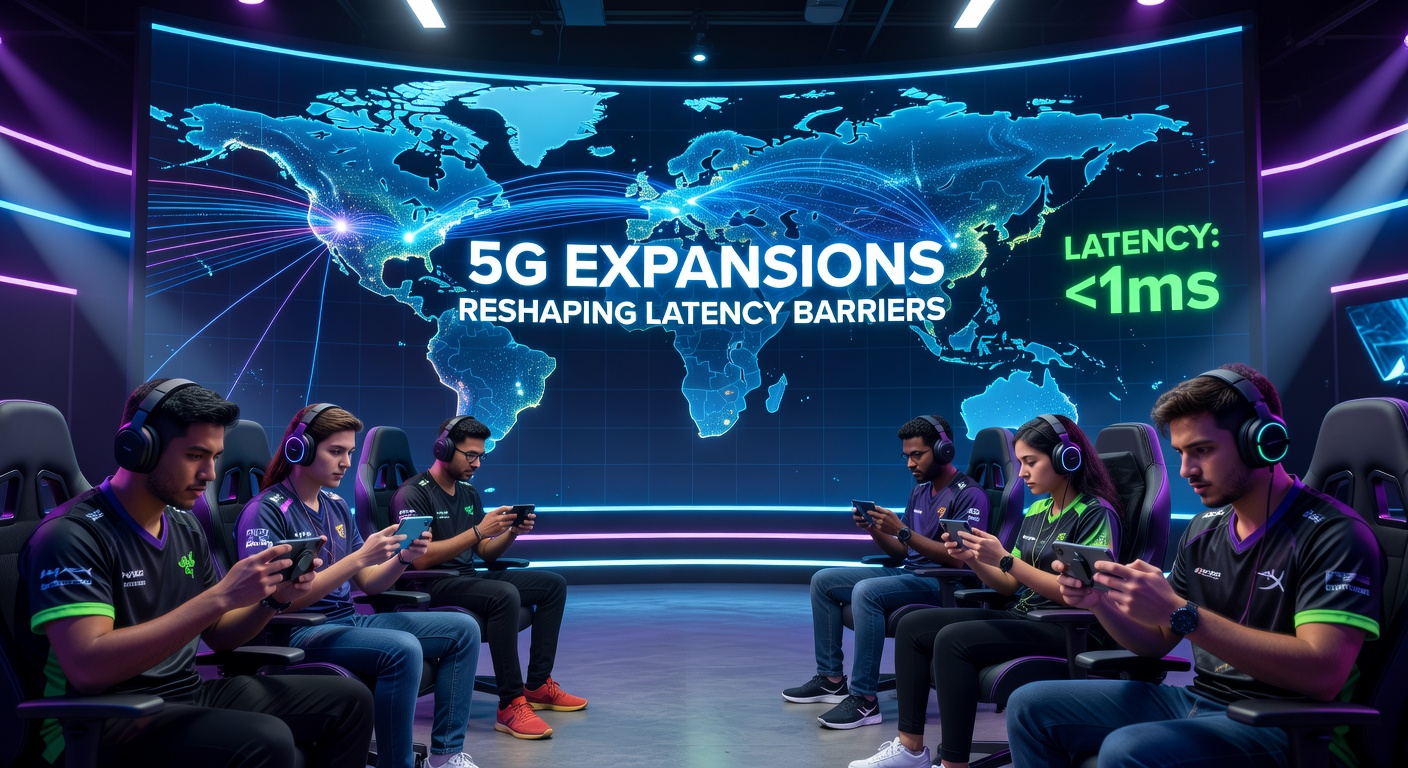
Regional governing bodies have begun publishing latency certification standards that require venues to maintain verified 5G coverage maps, and compliance testing now includes simulated packet-loss scenarios drawn from real-world crowd-density measurements. One study conducted by a university research group in Finland tracked over 1,200 mobile tournament sessions and found that 5G-connected players exhibited decision latency distributions statistically indistinguishable from those recorded on dedicated fiber lines when network load remained under 70 percent capacity.
Technical and Operational Considerations
While coverage continues to expand, rural and secondary-city venues still encounter occasional handover delays when devices transition between cells, prompting organizers to deploy temporary private 5G networks inside arenas. These on-site systems operate on dedicated spectrum slices and maintain direct peering to game servers, bypassing public internet routing entirely. Equipment vendors have documented that such configurations sustain sub-5 ms latency even when thousands of spectators simultaneously stream match footage on the same venue network.
Security protocols have also evolved alongside performance gains. Tournament networks now implement per-flow encryption and traffic isolation that prevent external interference without adding measurable overhead, and governing associations in multiple jurisdictions have issued guidelines requiring these measures before events receive official sanction. The result is a growing catalog of verified venues that meet both latency and integrity thresholds, allowing promoters to rotate host cities more freely than in previous years.
Future Trajectory of Mobile Esports Connectivity
Standards bodies continue to refine 5G-Advanced specifications that introduce even tighter timing synchronization across distributed edge nodes, and early test deployments indicate potential for sub-3 ms consistent latency in controlled environments. Mobile esports circuits are already incorporating these capabilities into qualification pathways, with several circuits announcing plans to run fully mobile-only world finals by late 2027. Continued spectrum auctions and small-cell densification programs across additional markets will determine how quickly the remaining geographic gaps close.
Conclusion
5G expansions have shifted the operational baseline for worldwide mobile esports by delivering measurable reductions in latency and jitter that previously limited tournament scale and fairness. Infrastructure deployments through 2026, combined with device and software optimizations, enable synchronized global brackets that operate under consistent timing conditions. As additional markets reach certified coverage levels and standards bodies finalize subsequent releases, the technical constraints that once separated mobile competition from traditional formats continue to narrow.